6–7 November 2026
"Monets Bioismus — 100 Jahre Metamorphose"
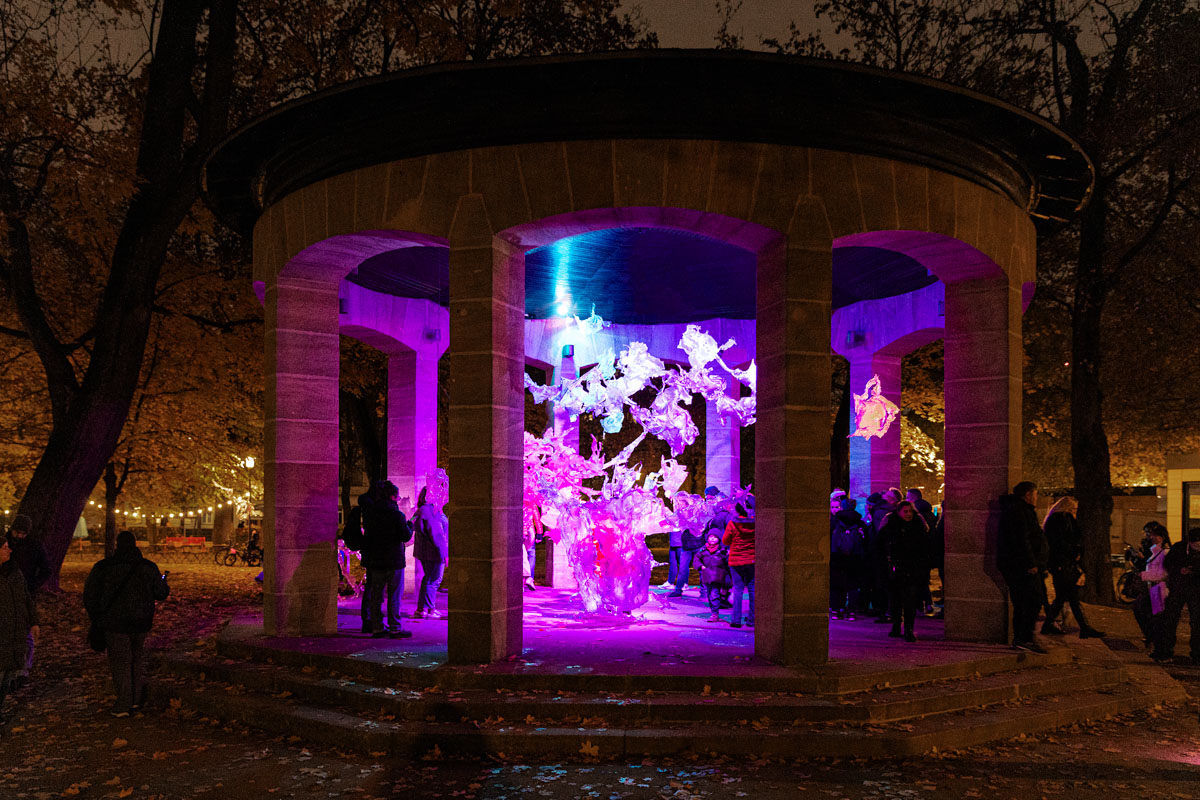
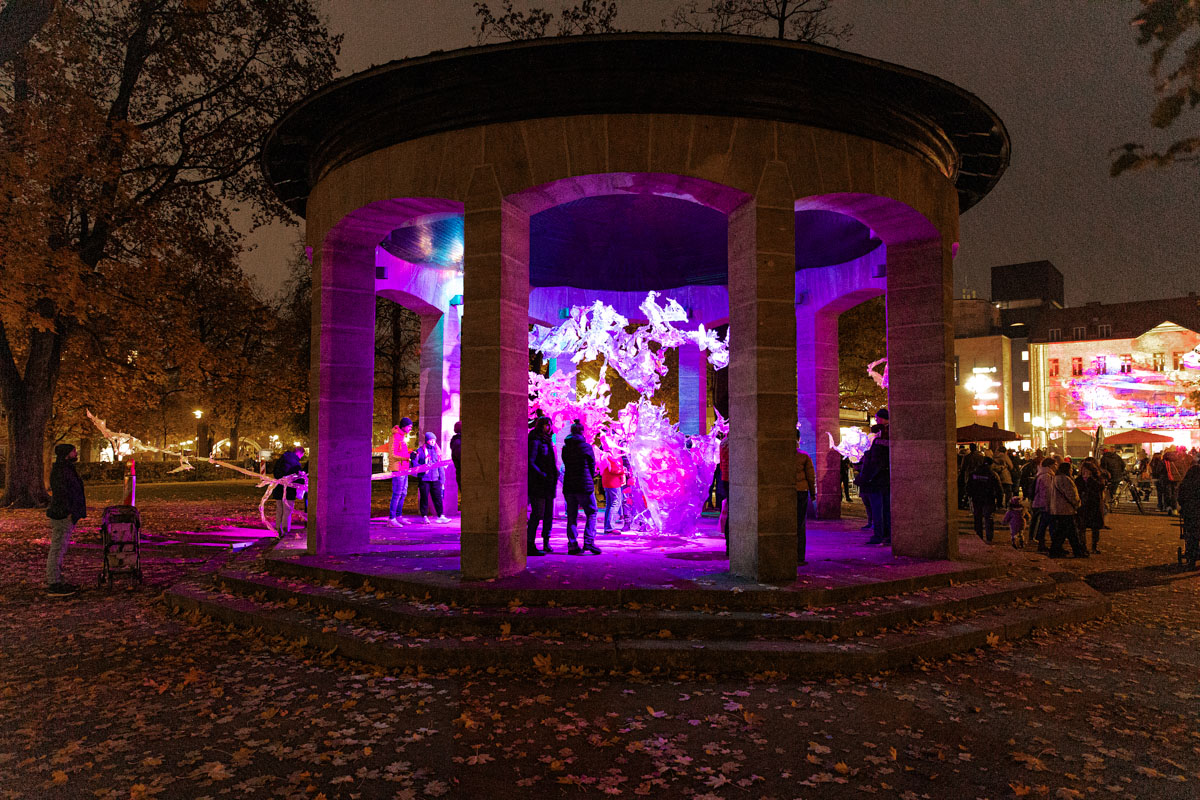
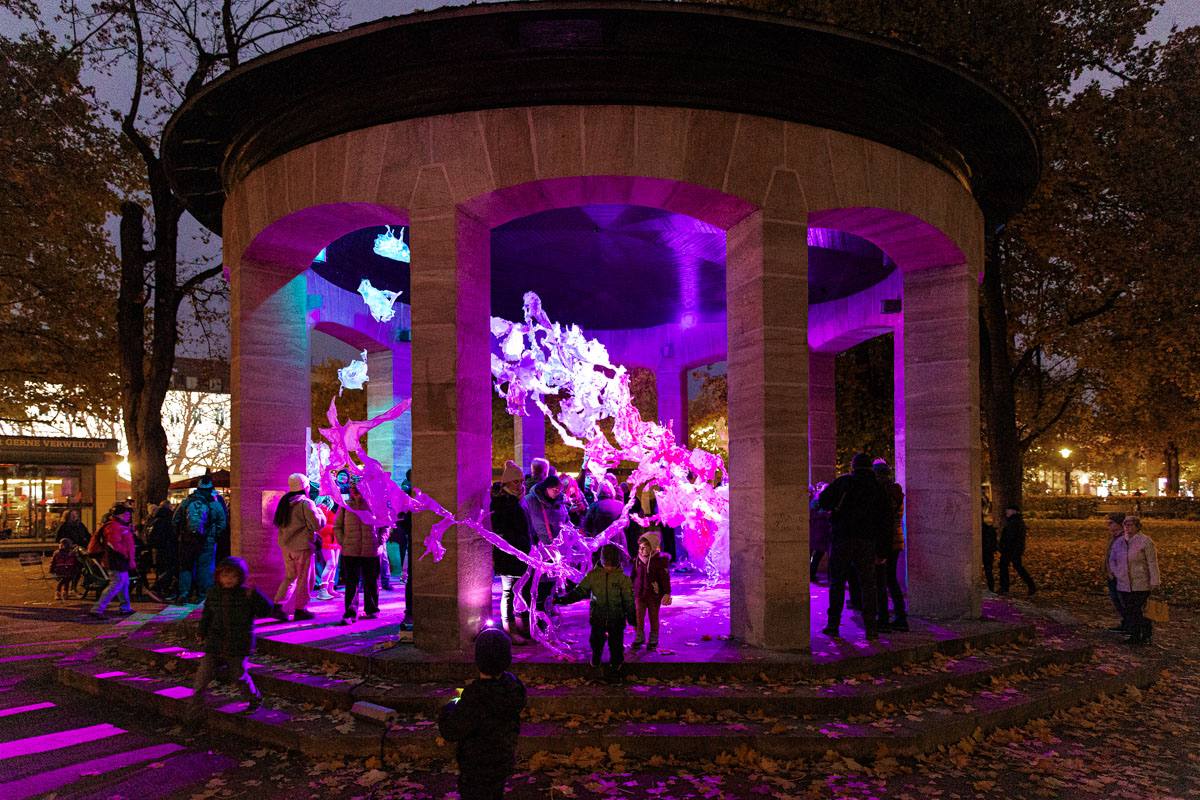
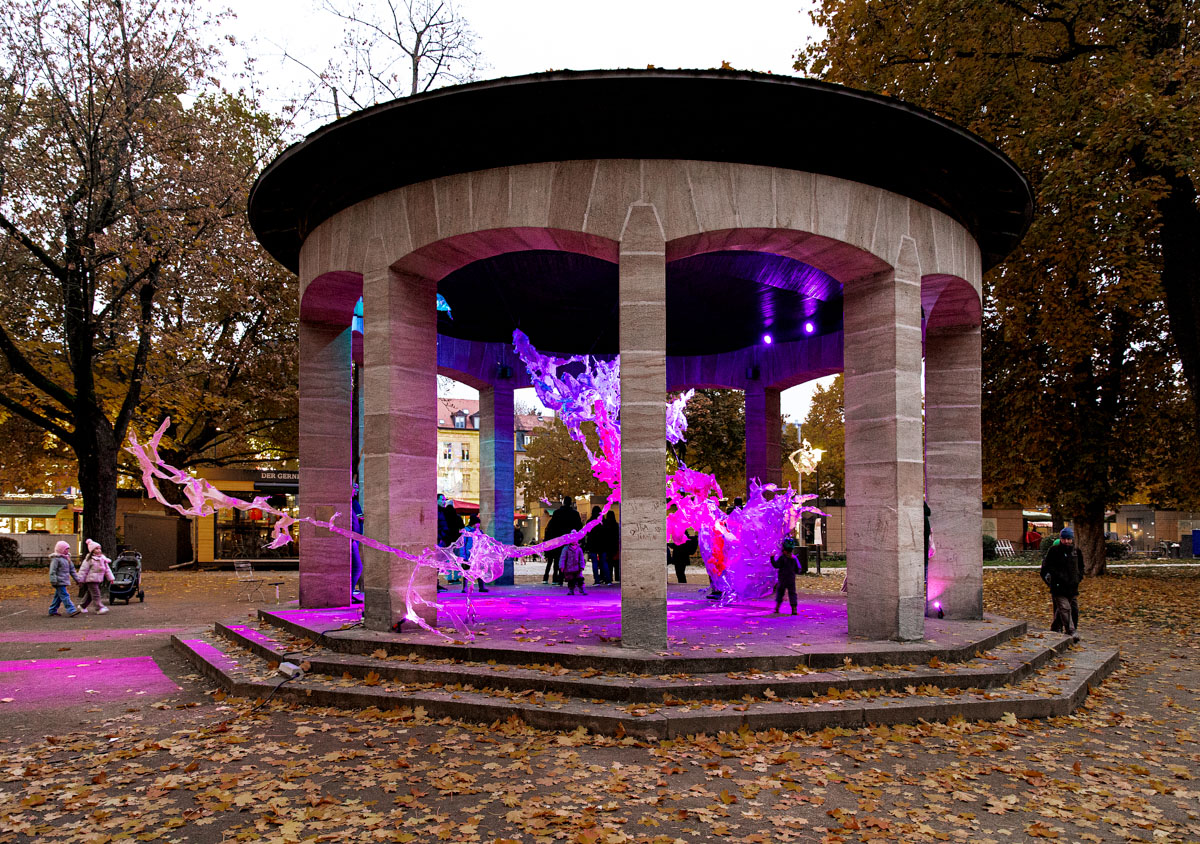
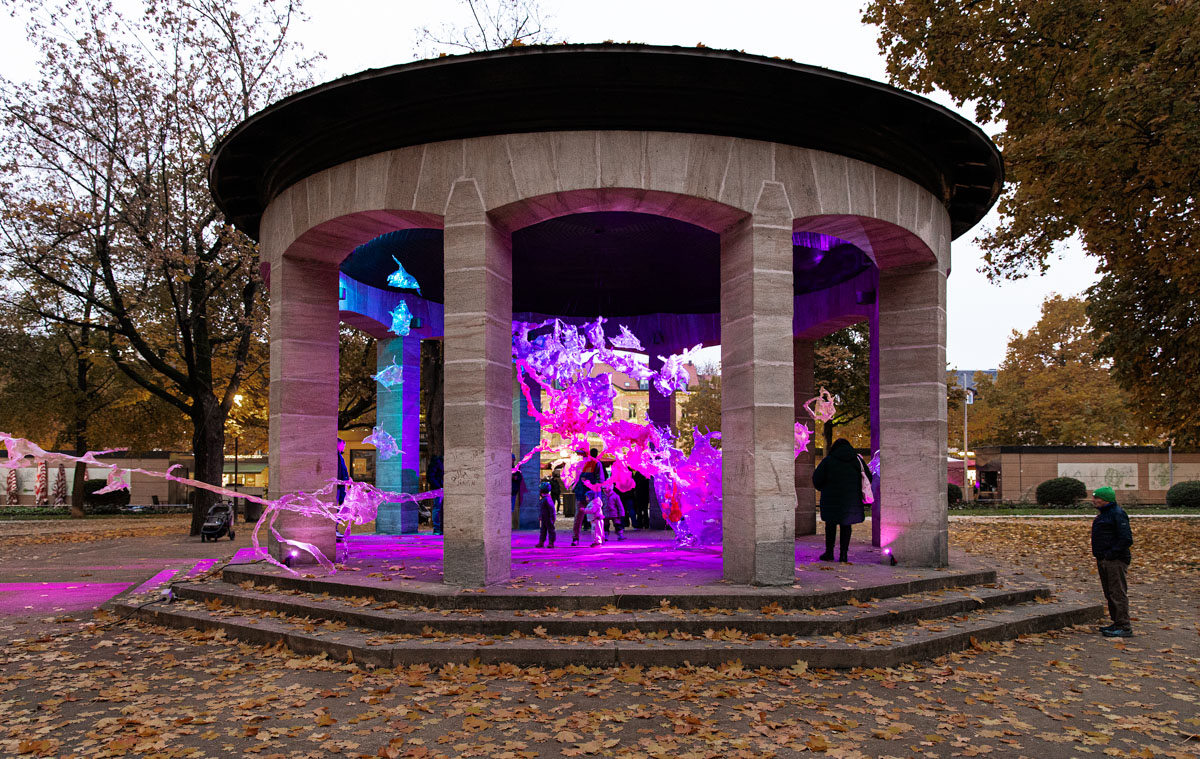
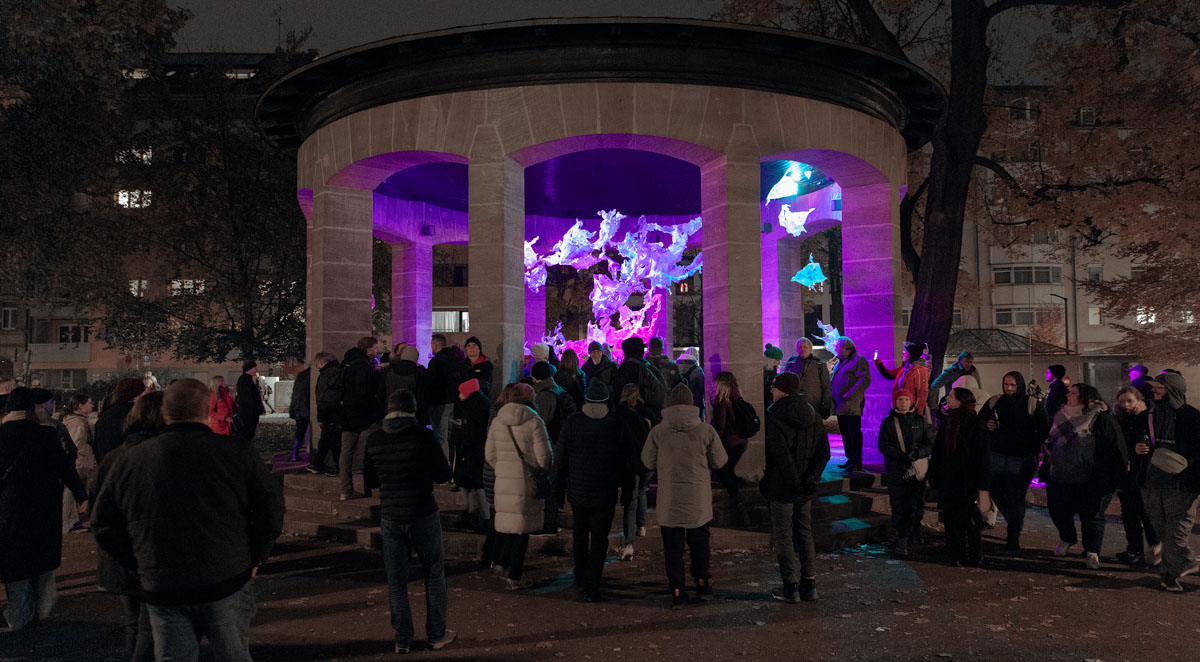
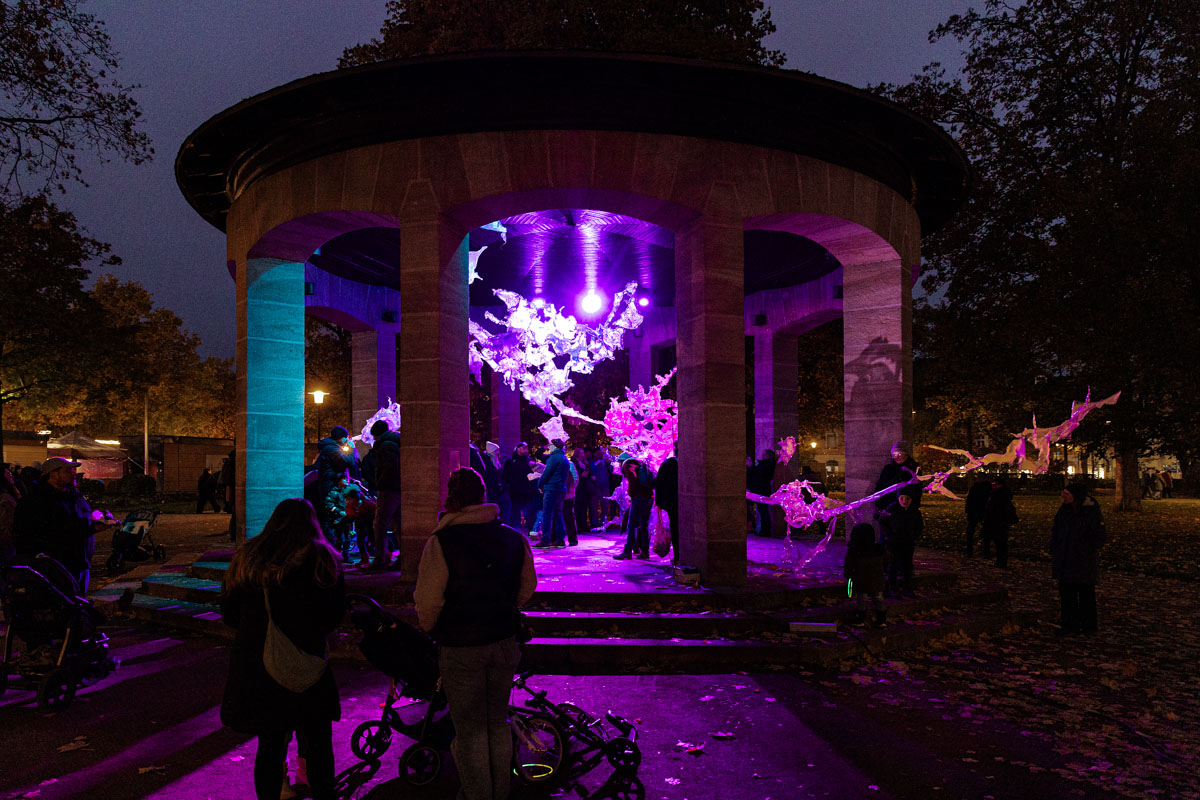
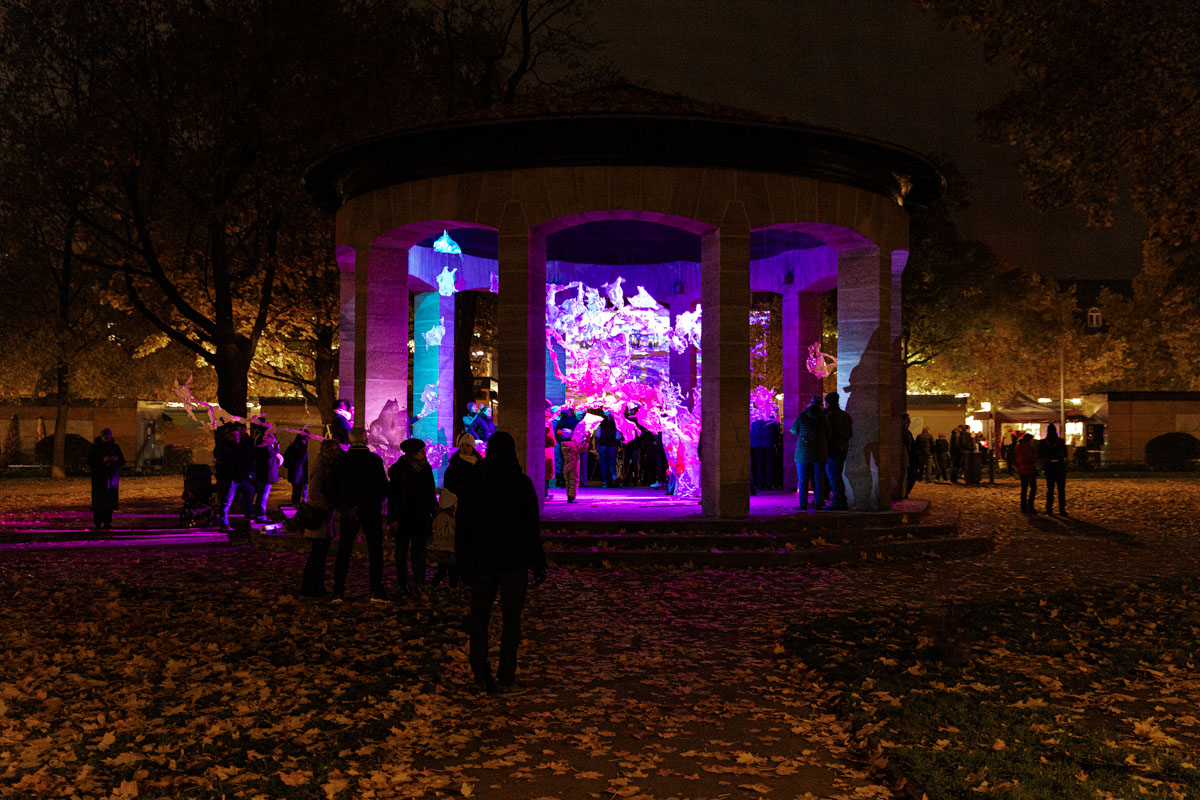
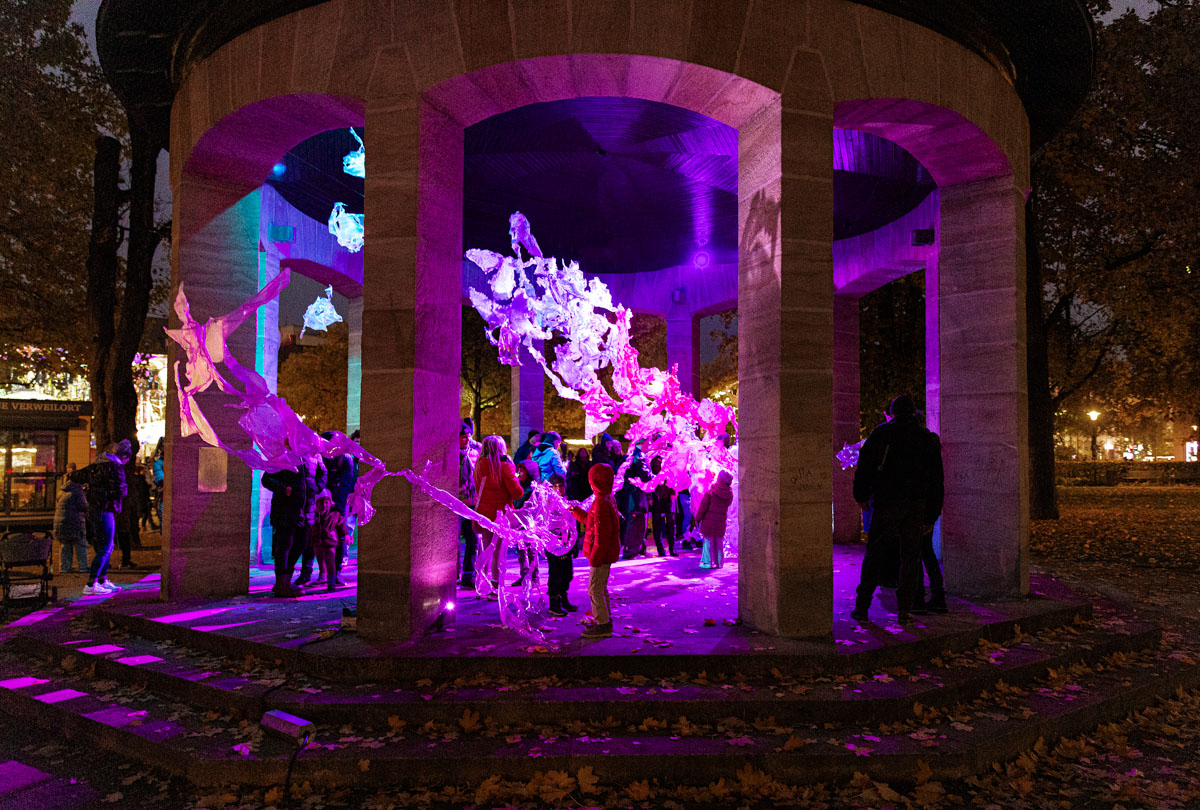
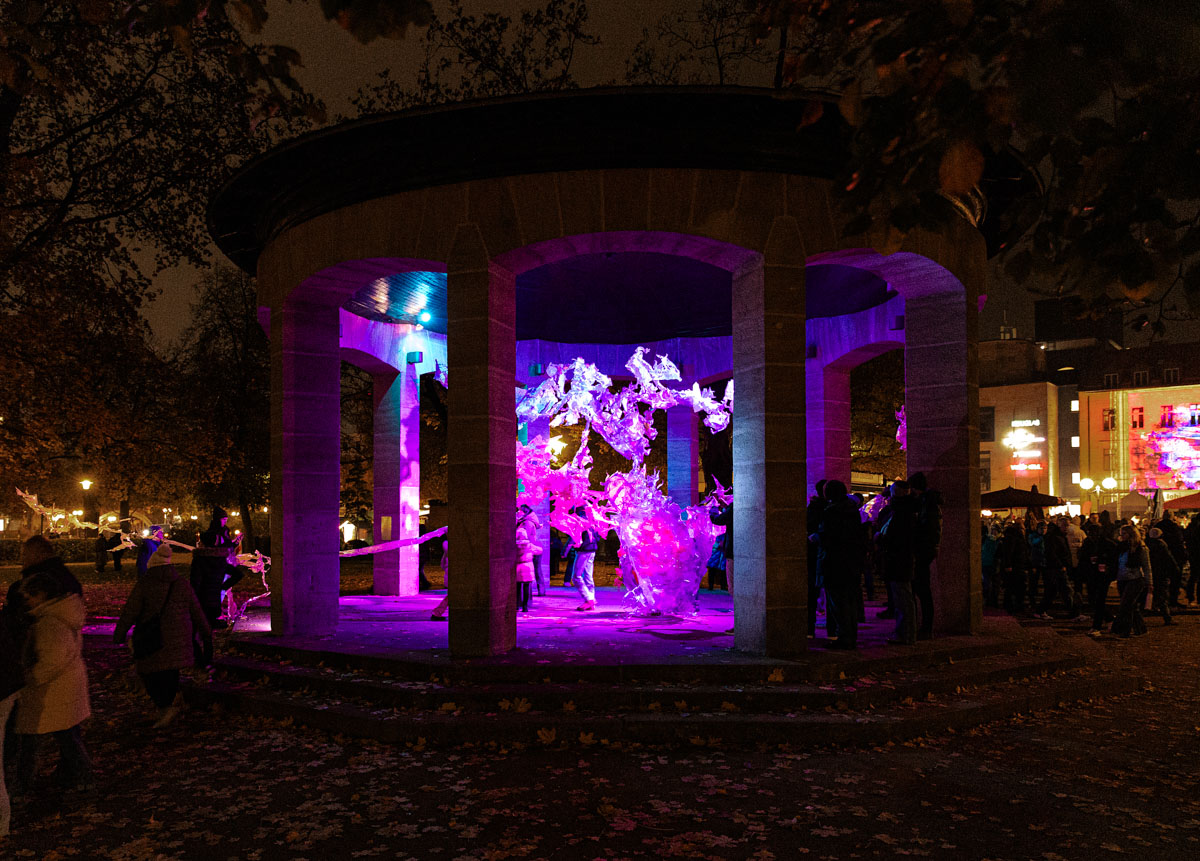
Fürther Glanzlichter, Pavilion in the Dr.-Konrad-Adenauer-Anlage, Fürth, Germany
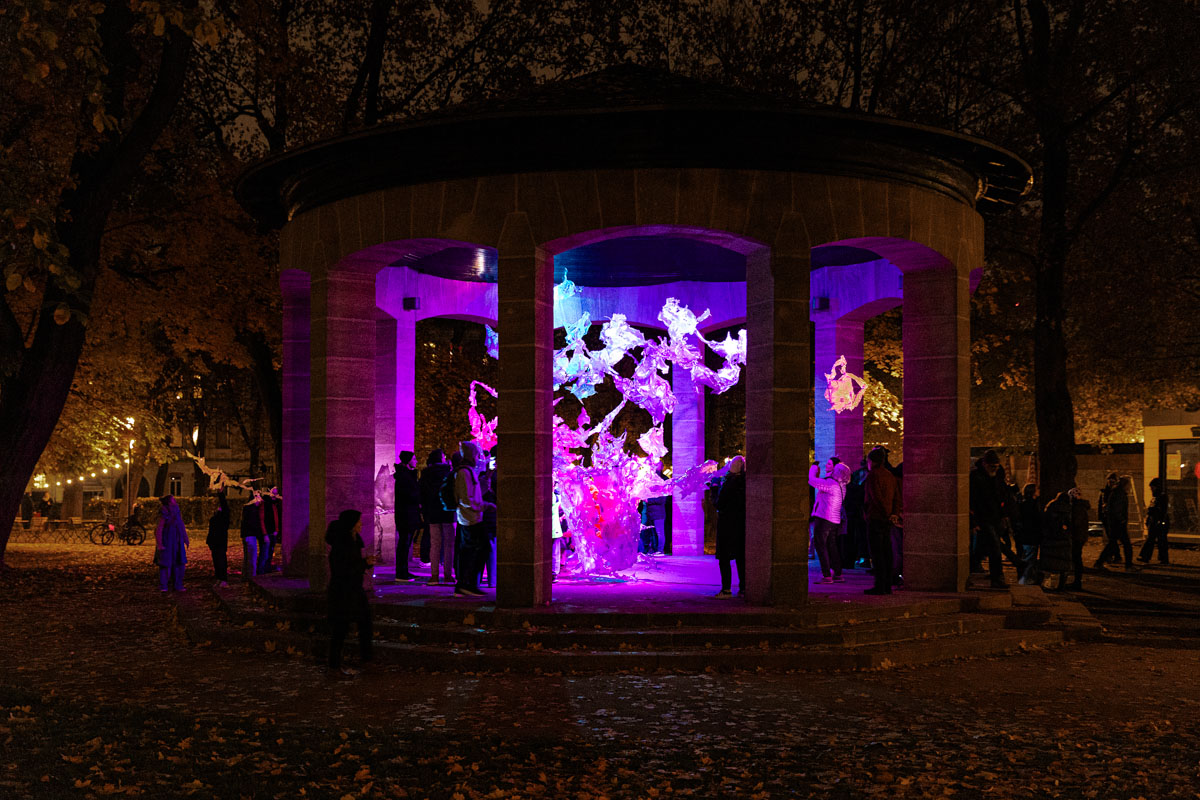
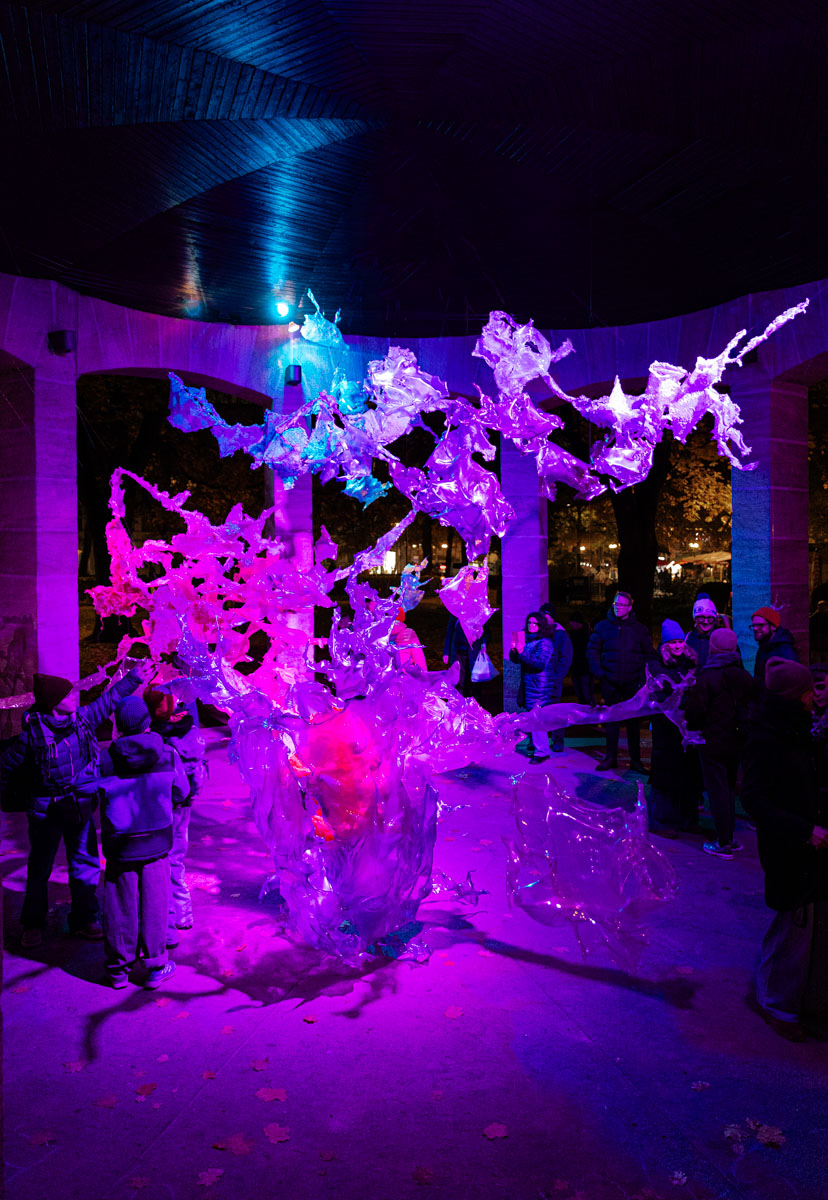
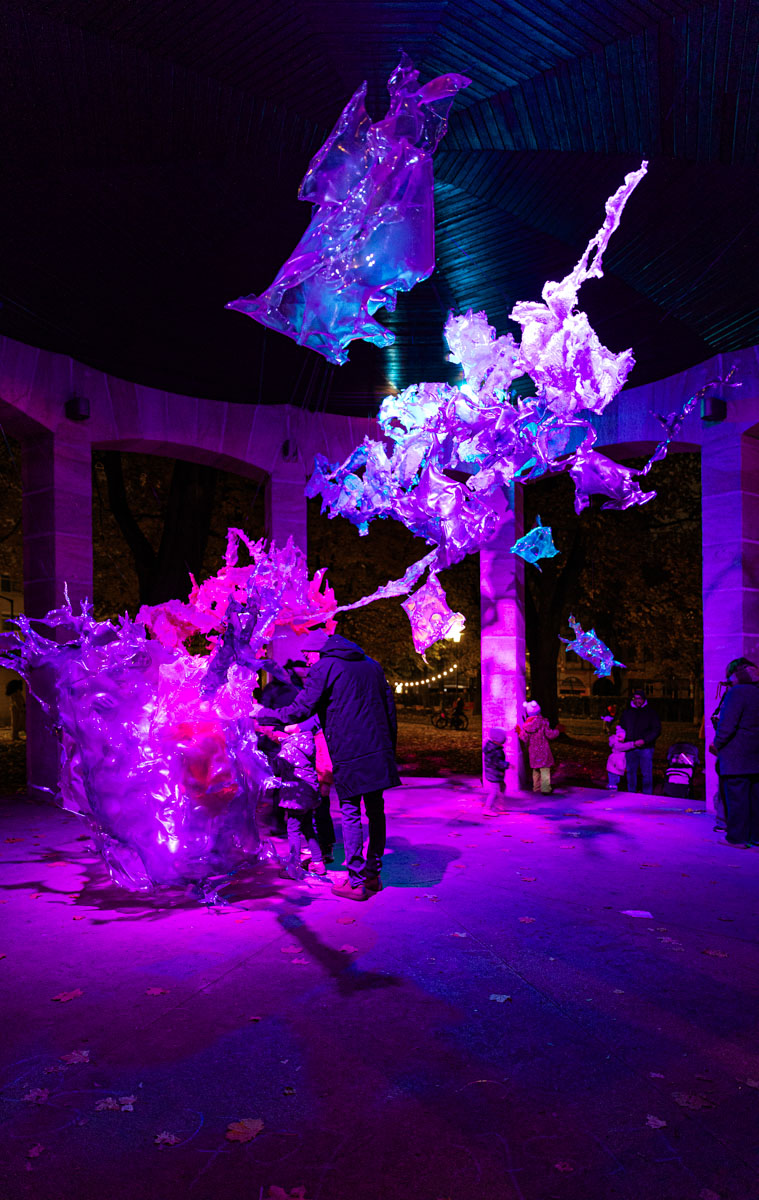
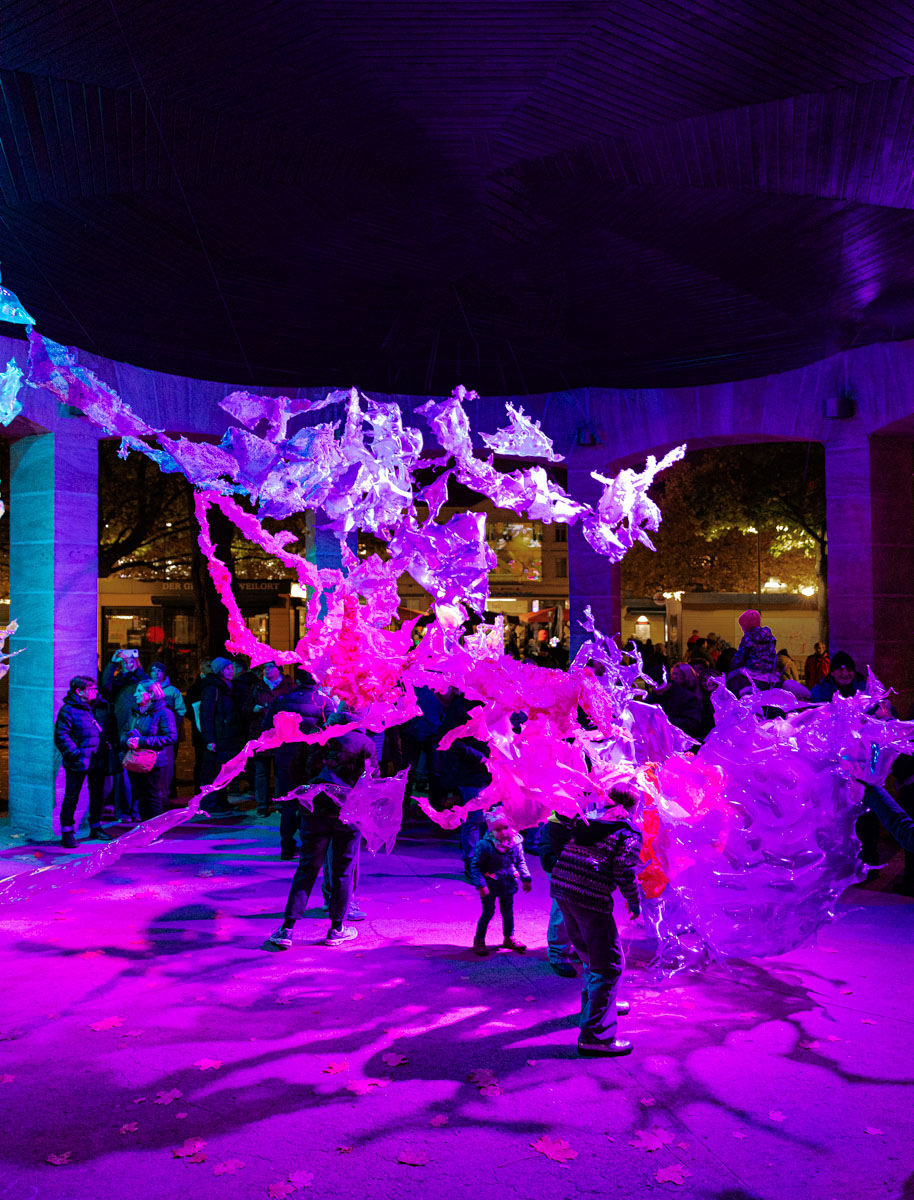
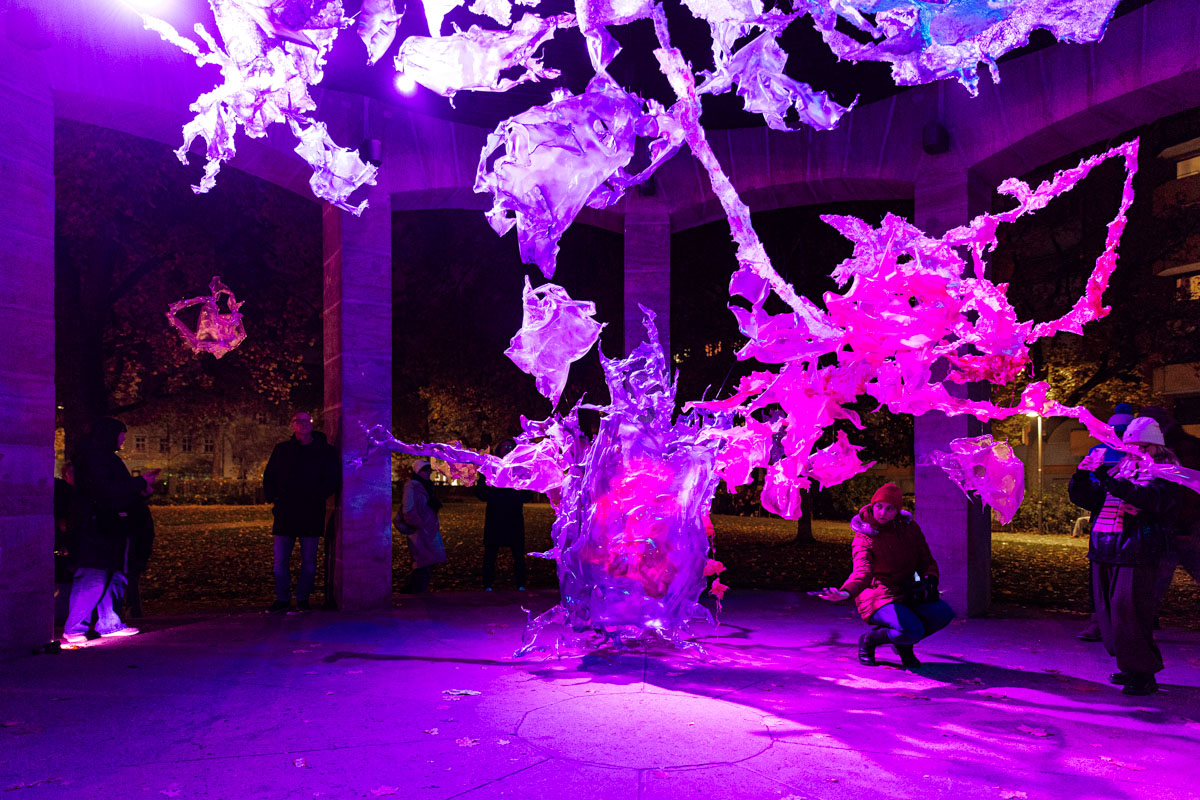
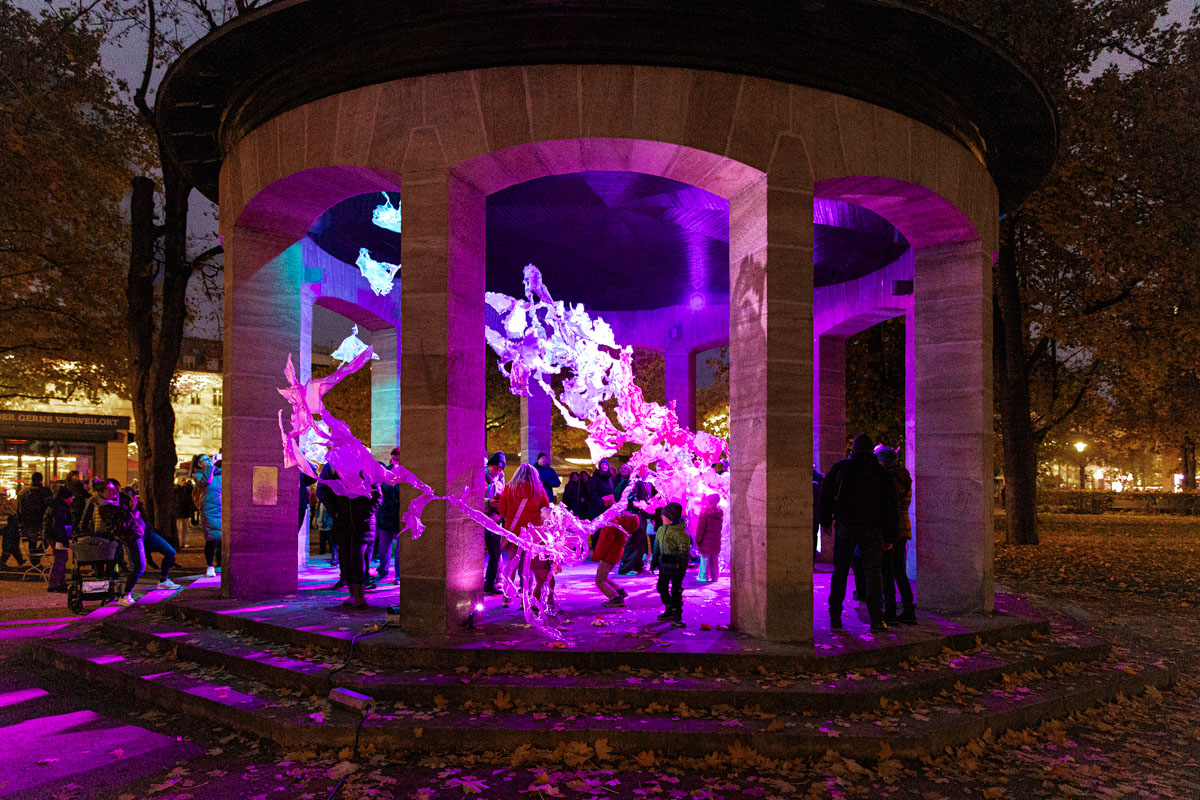
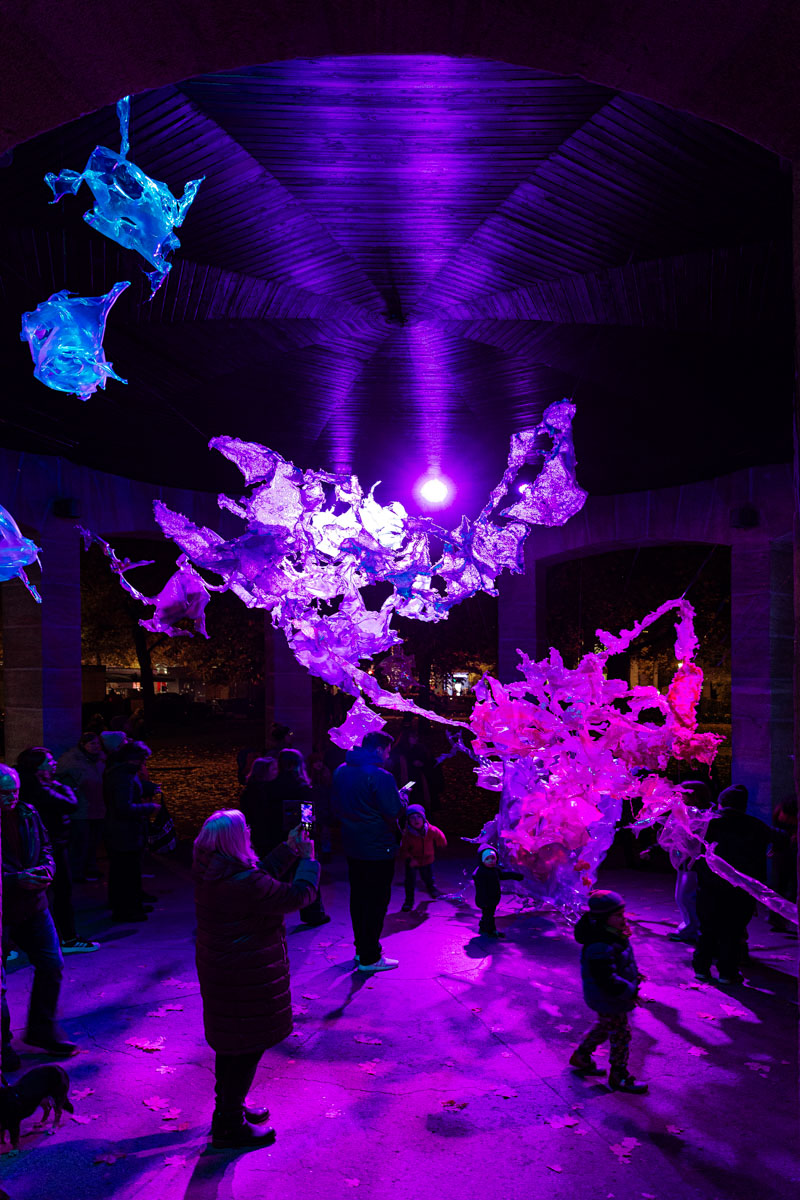
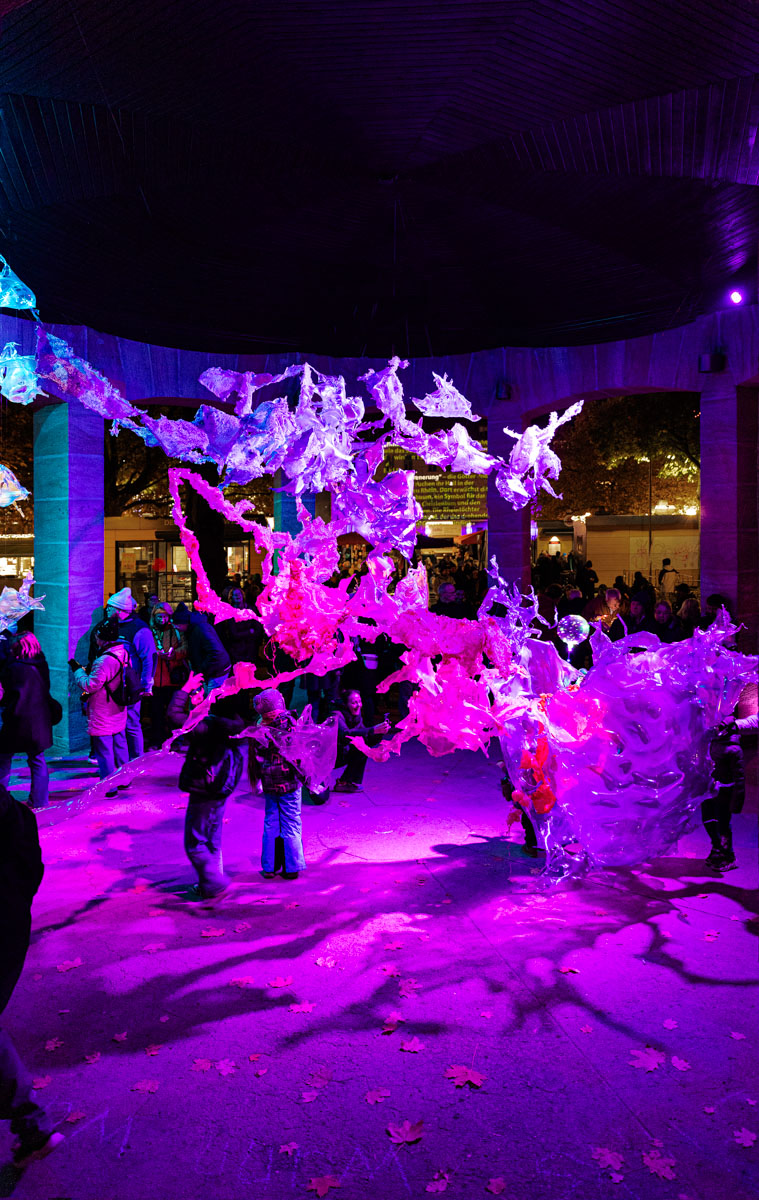
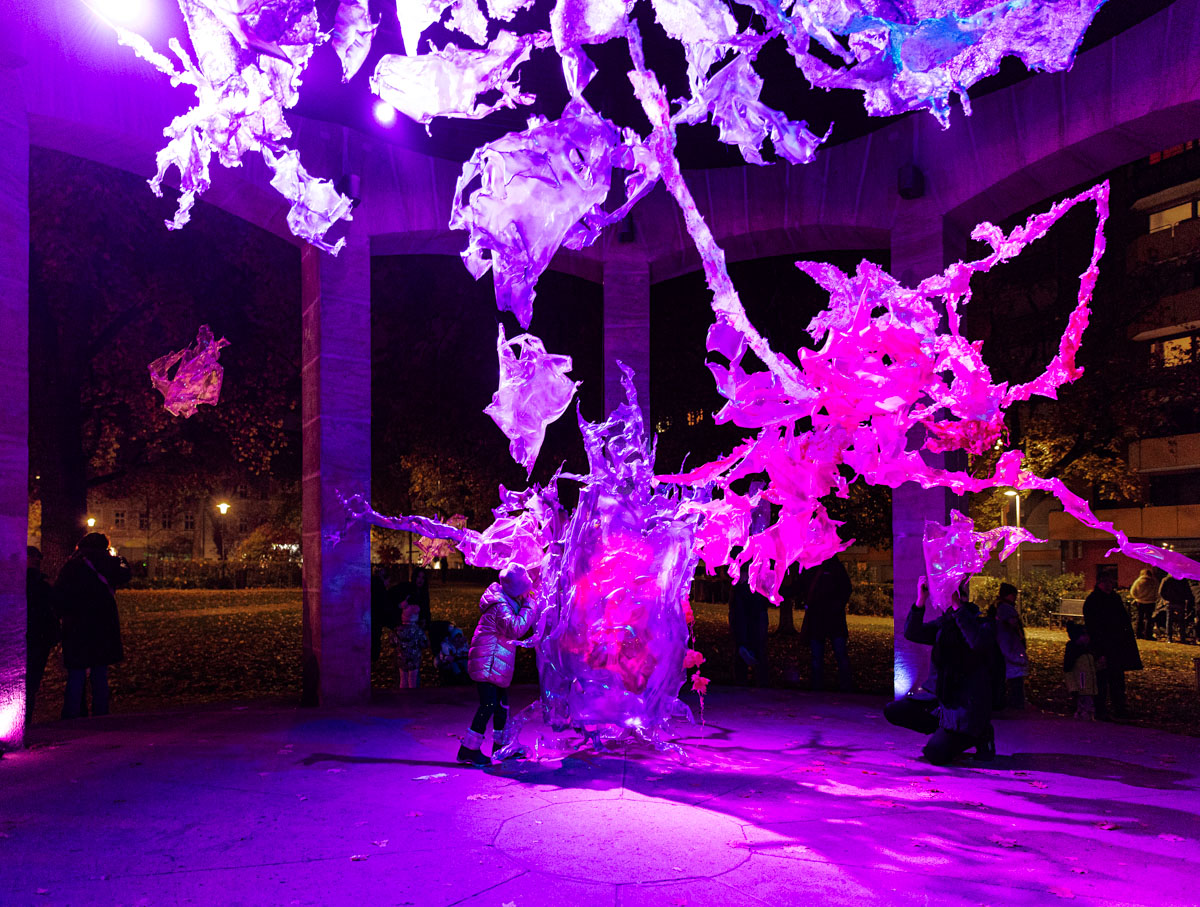
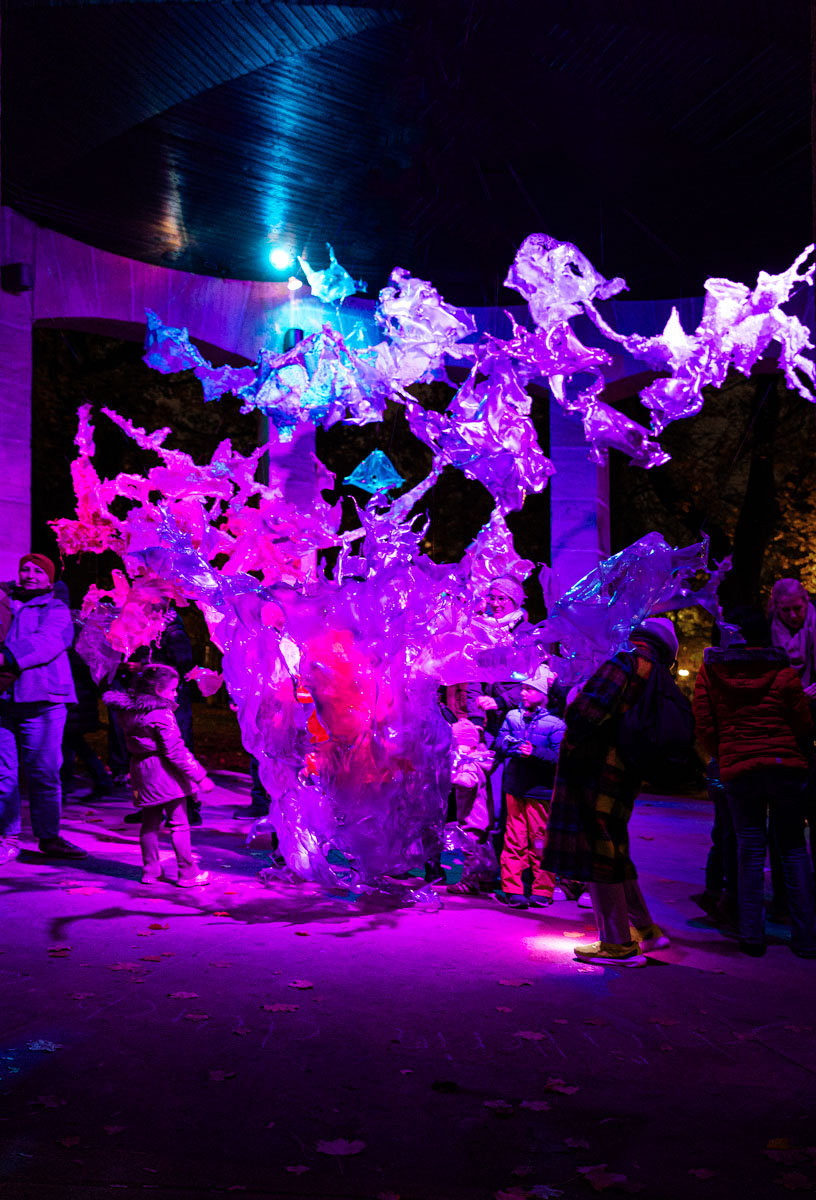
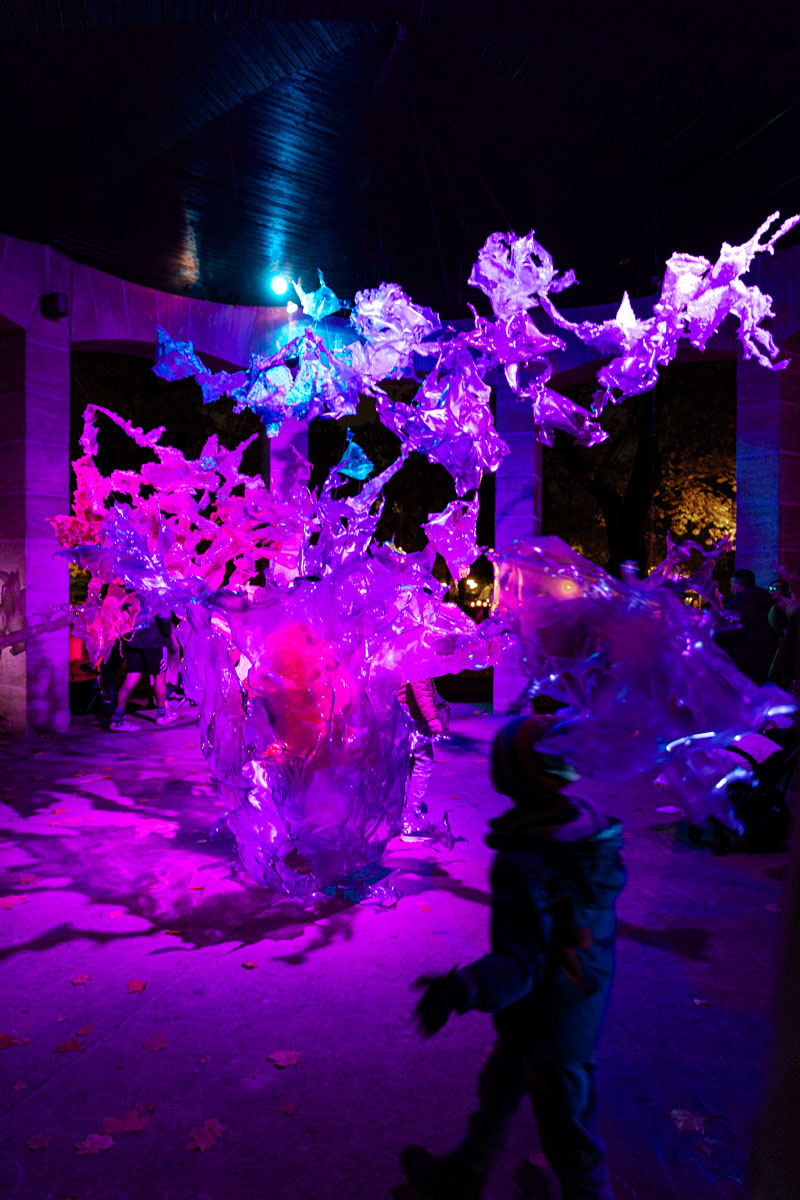
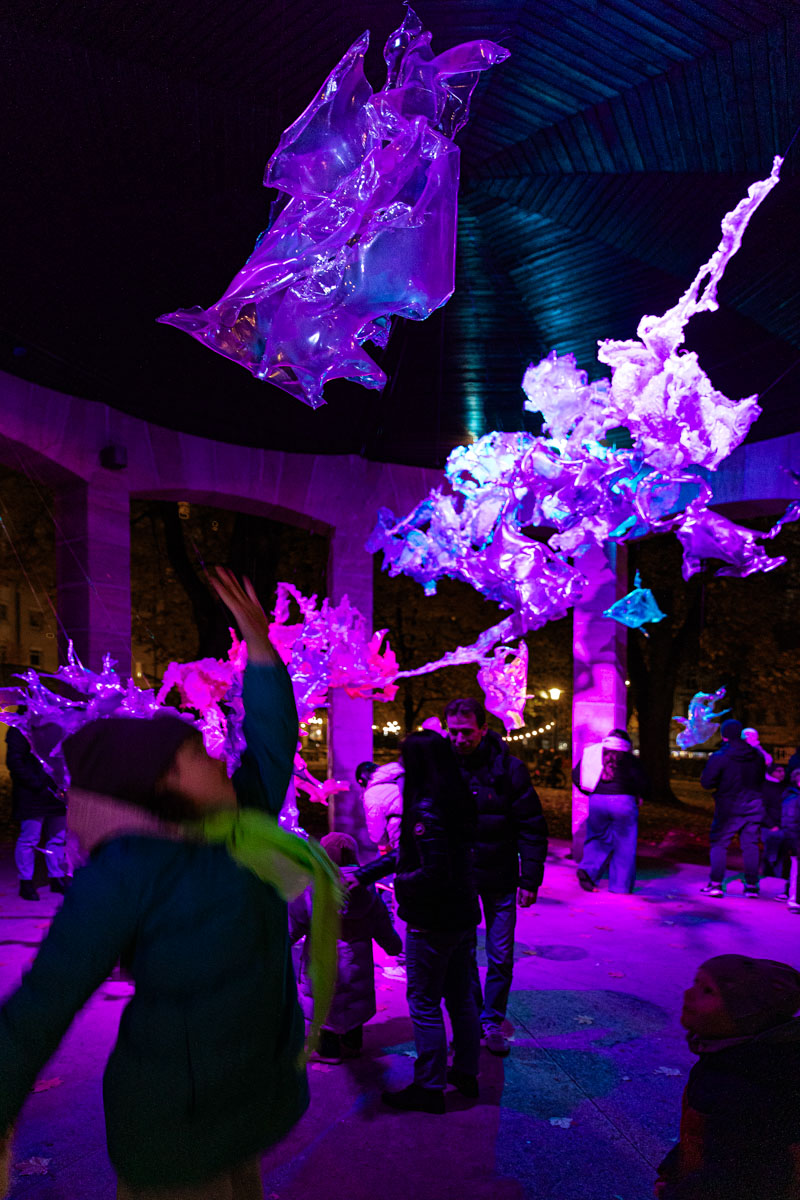
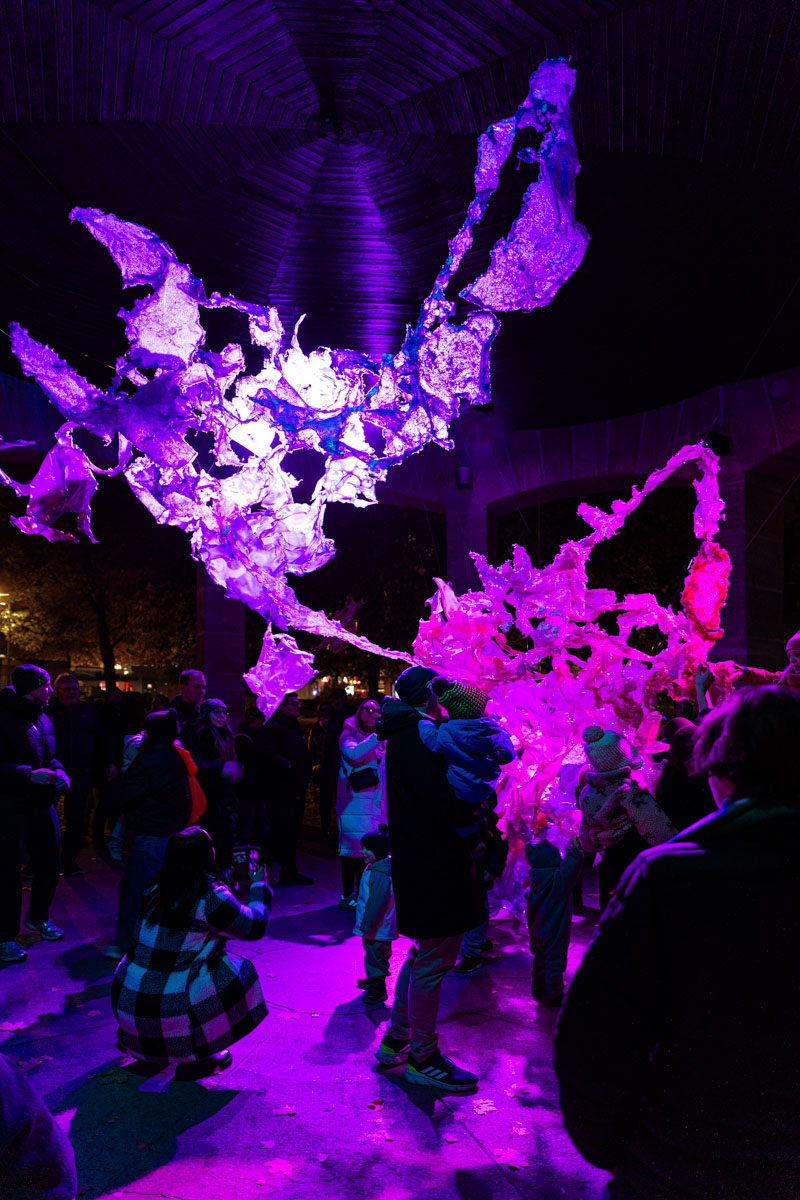
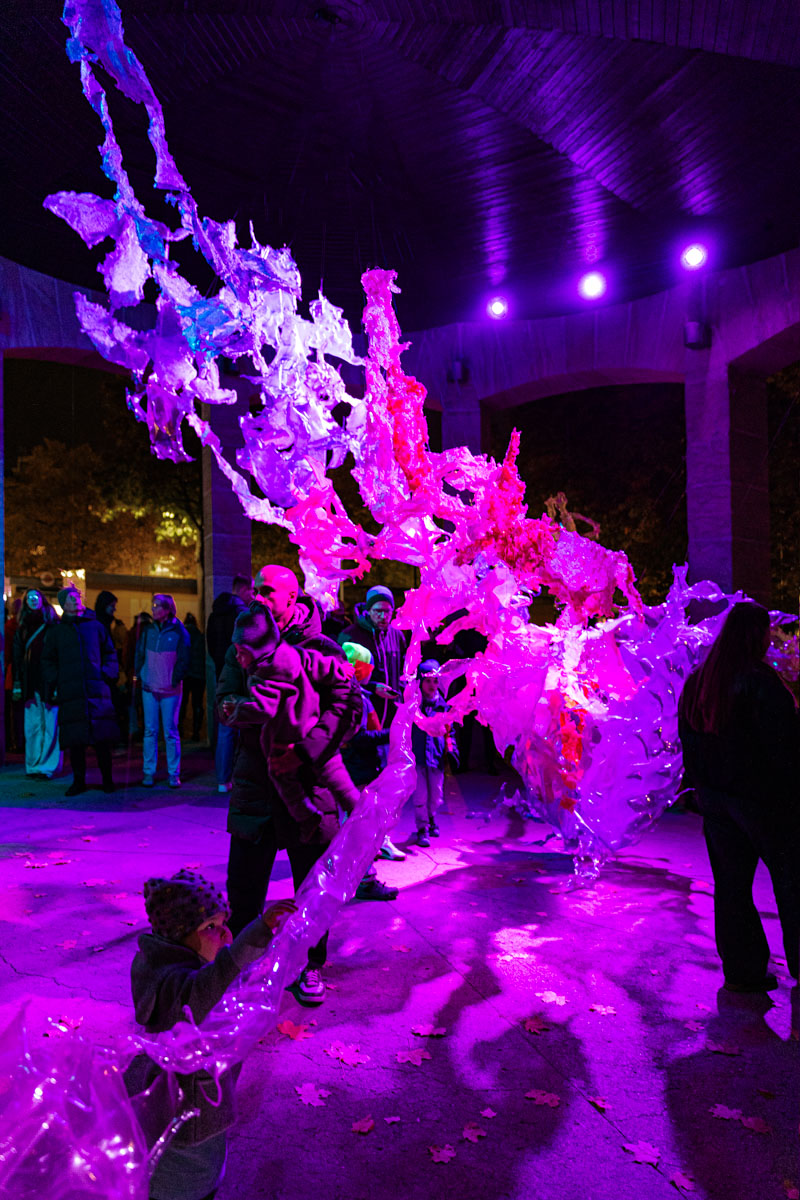
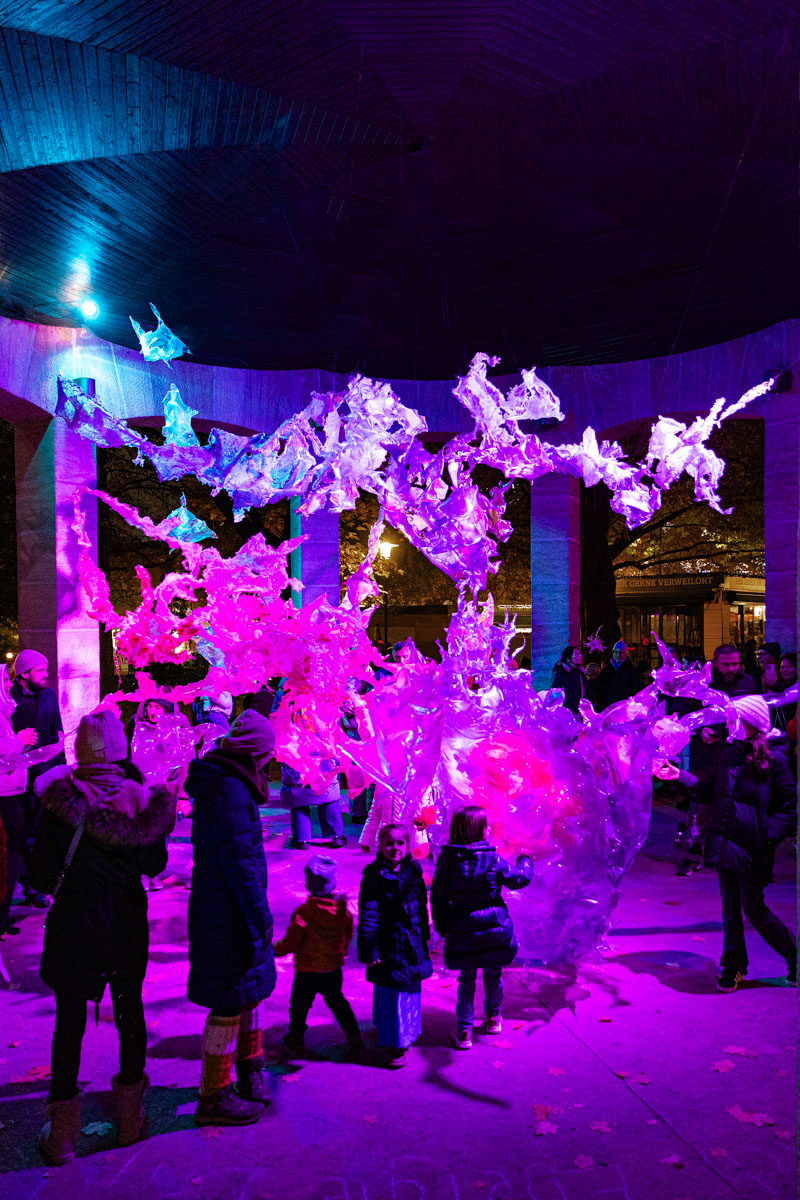
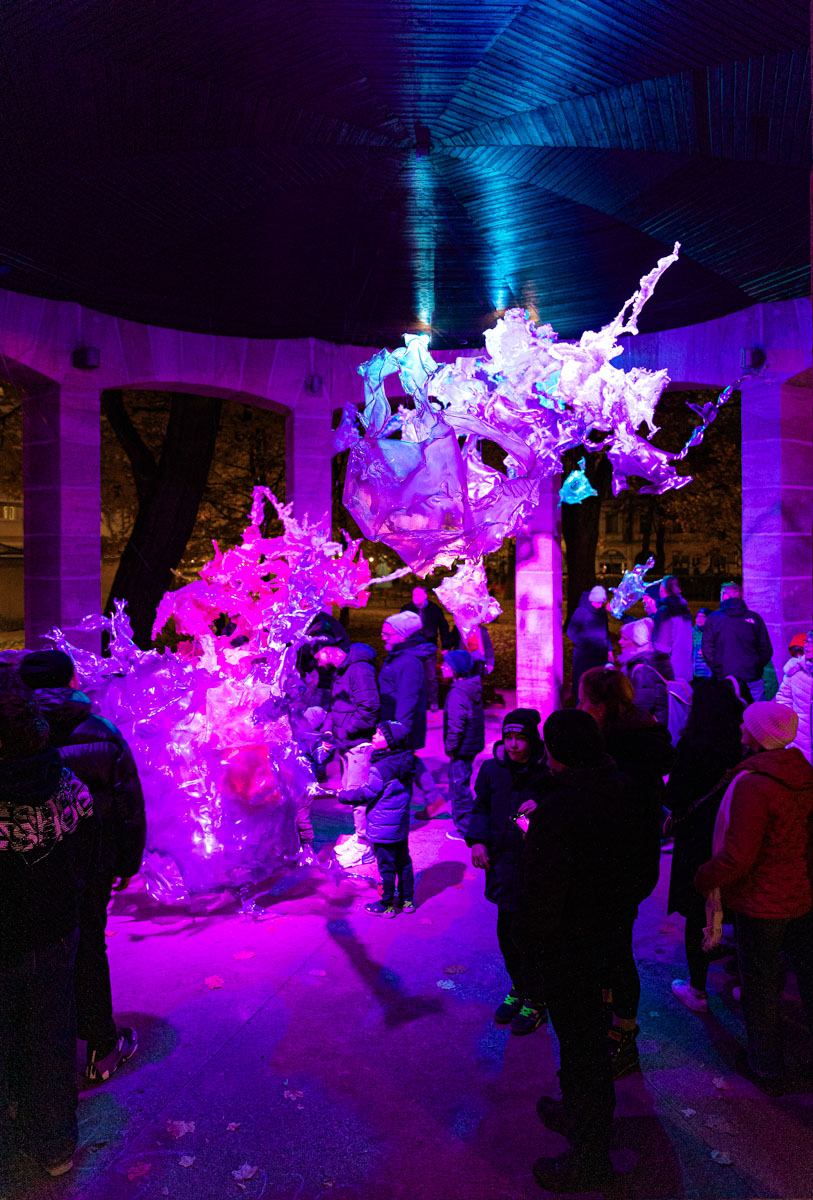
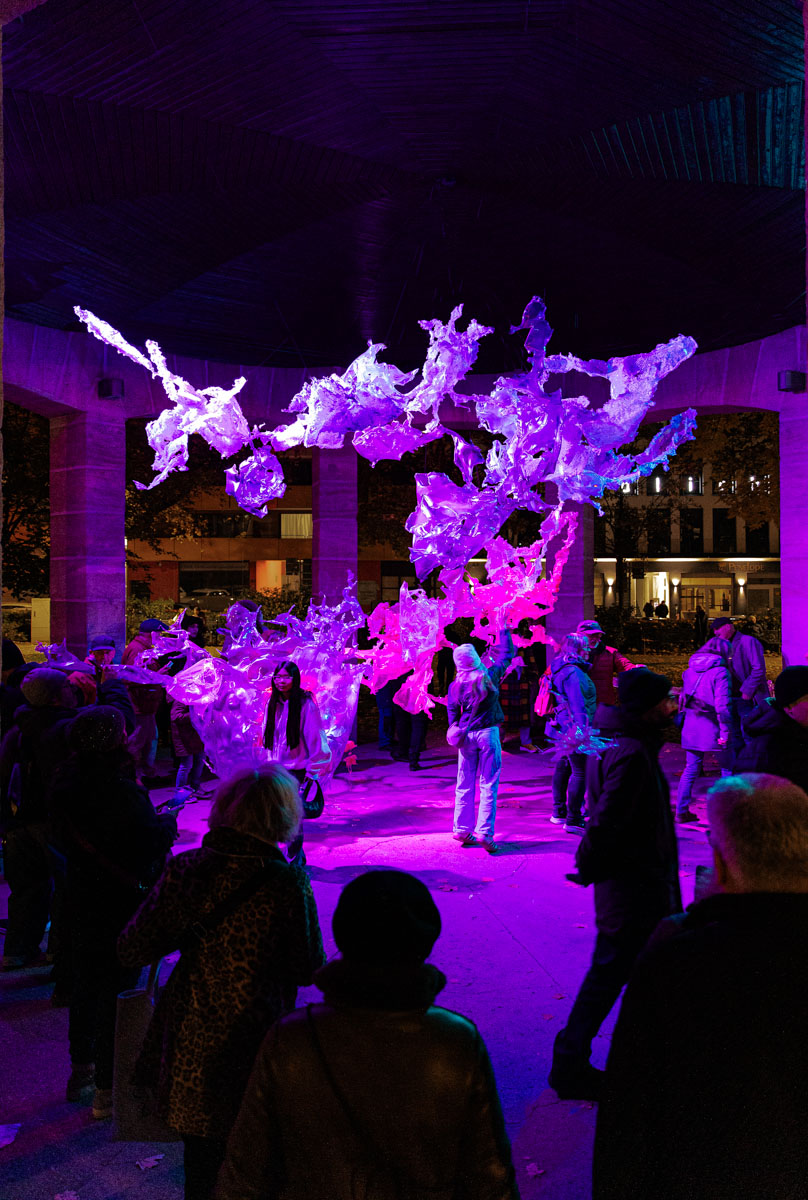
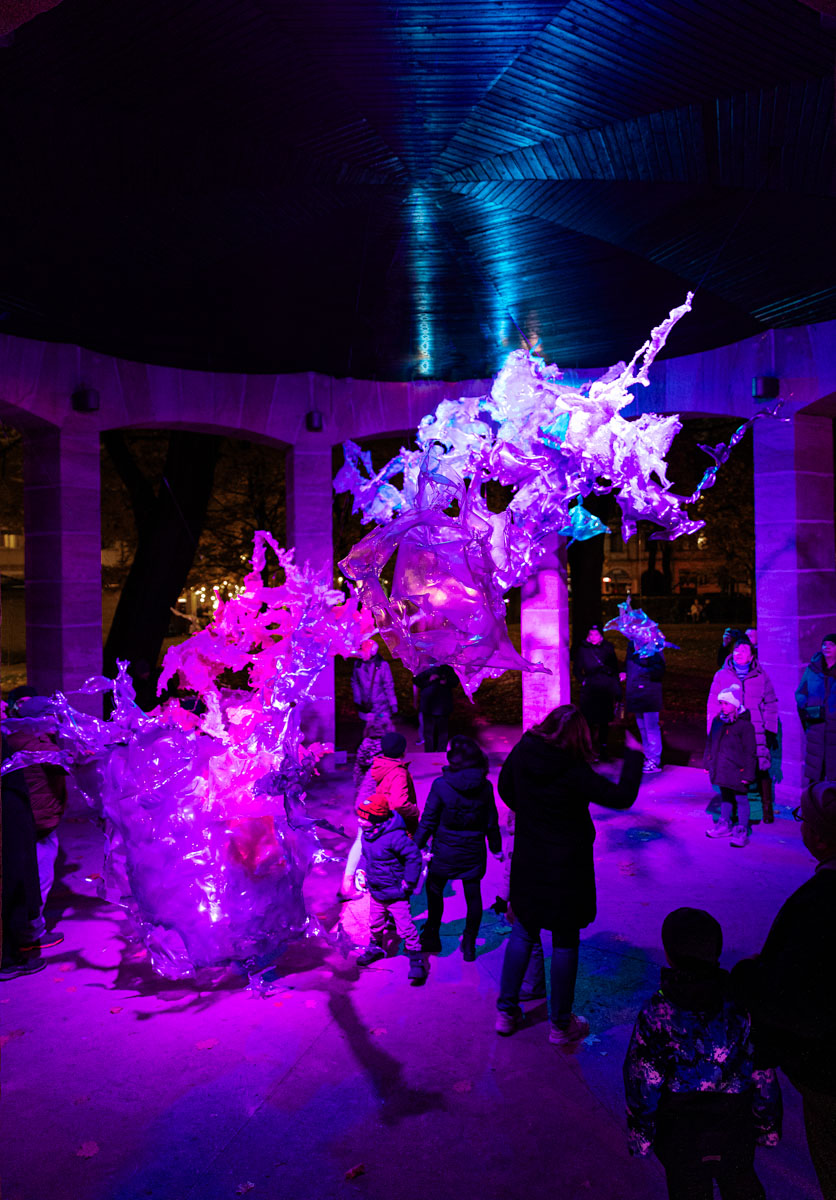
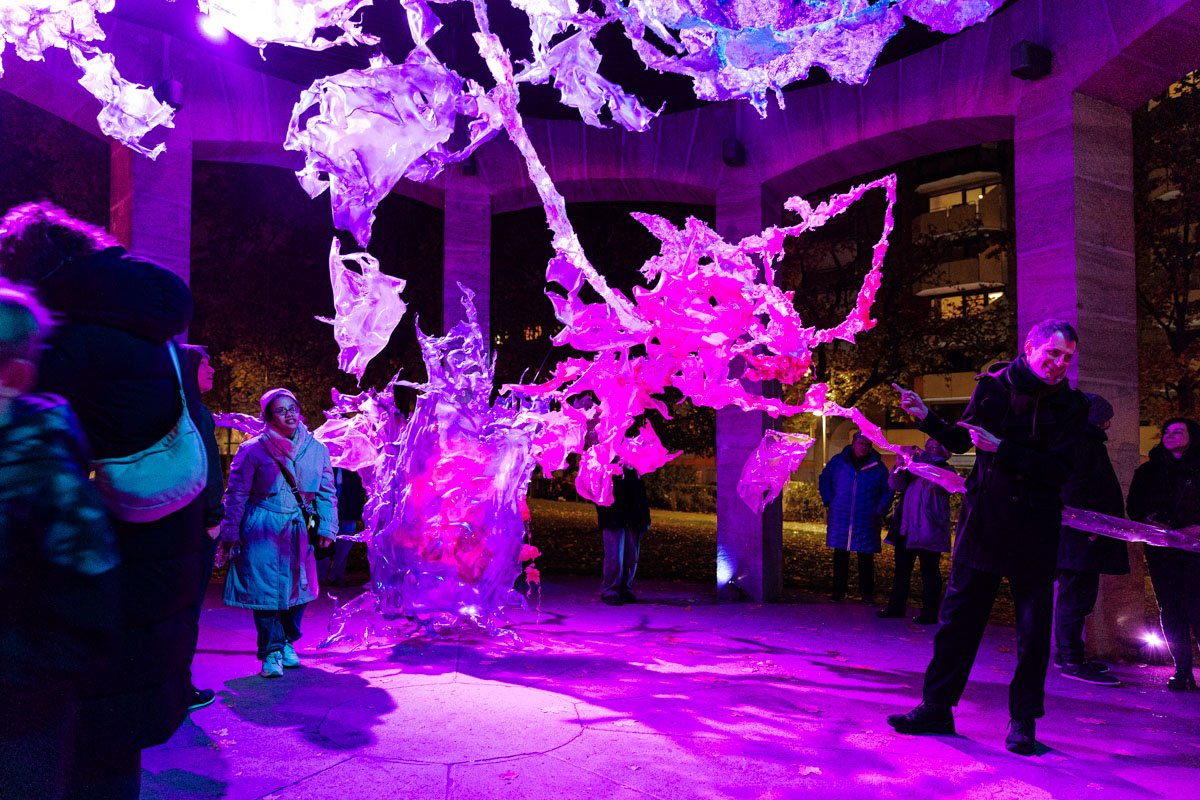
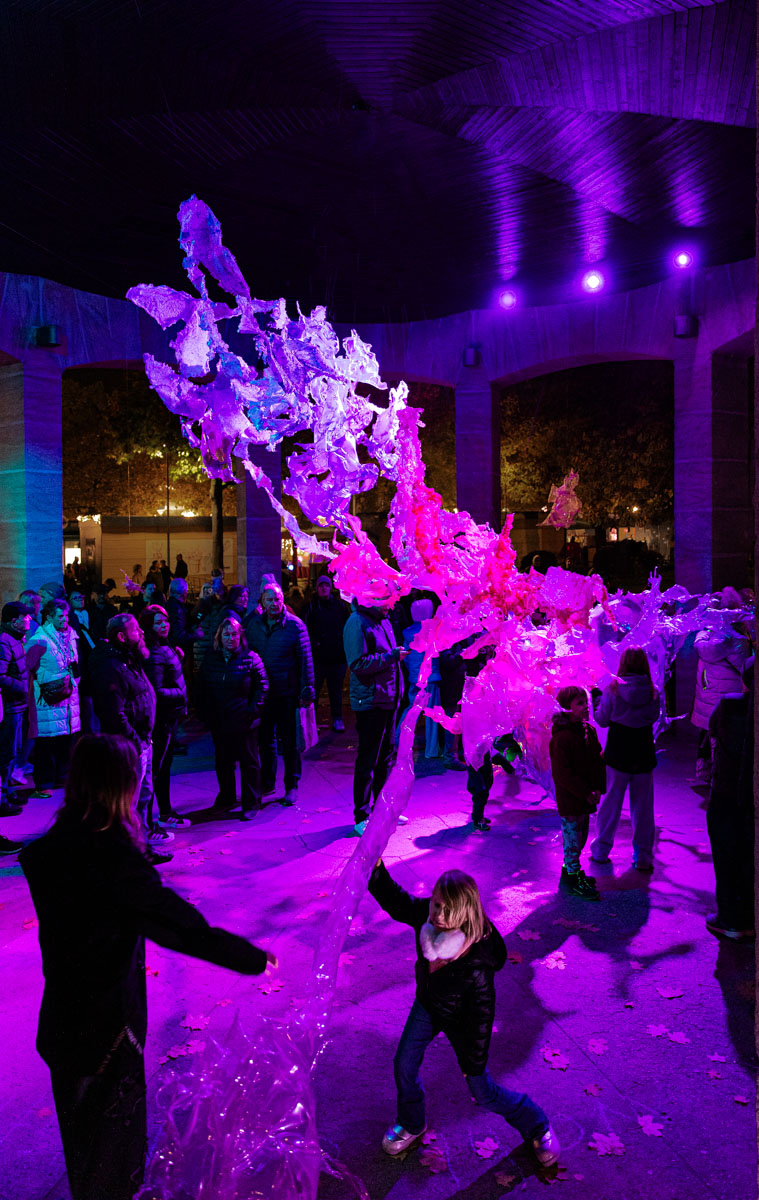
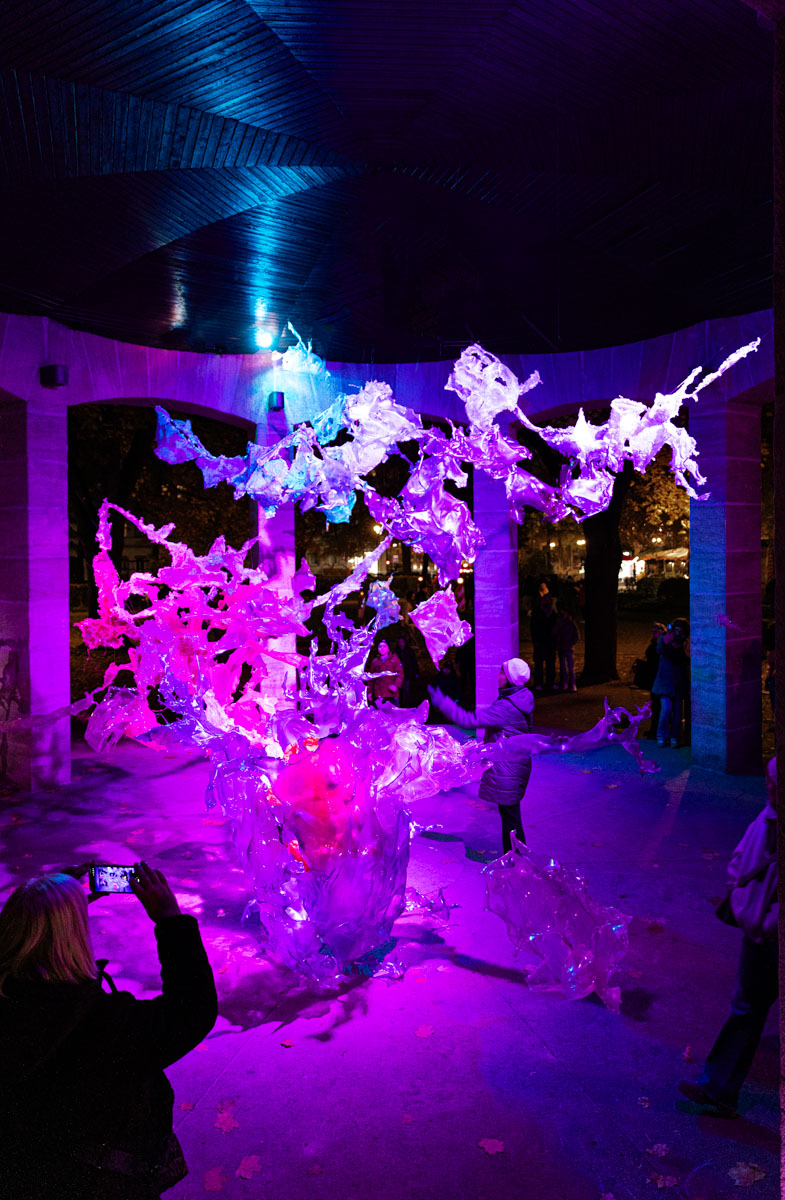
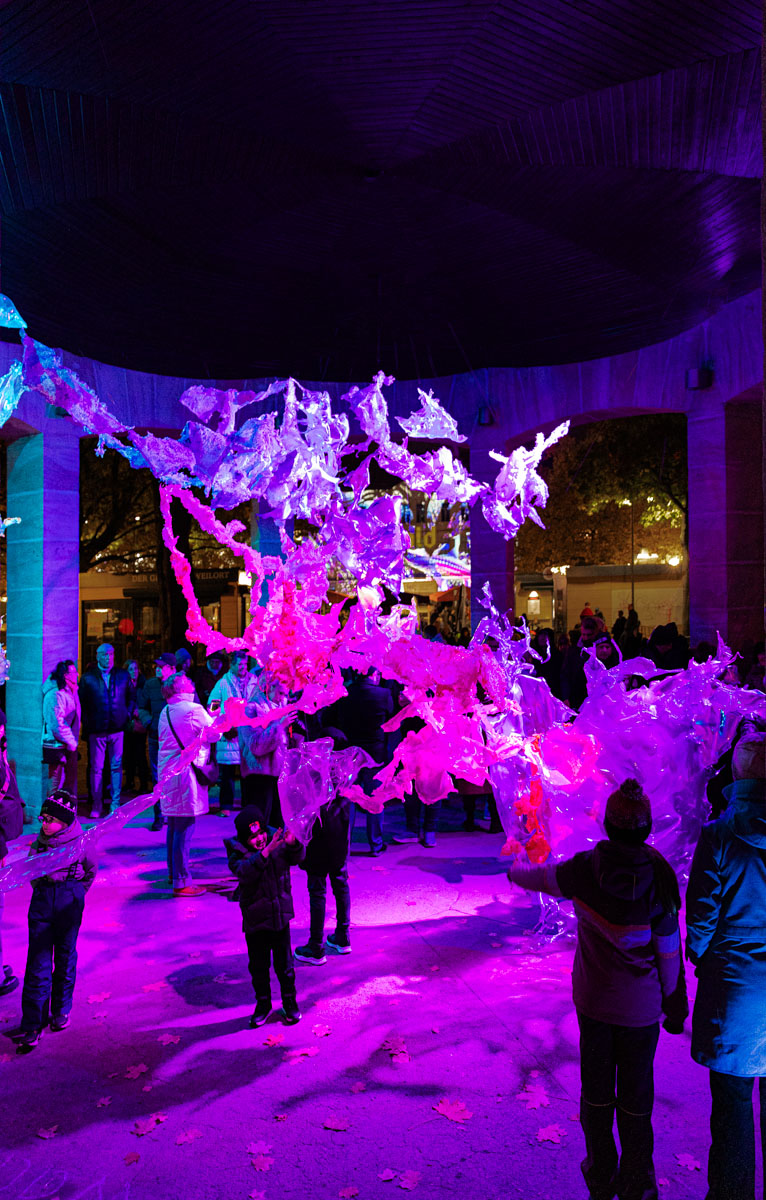
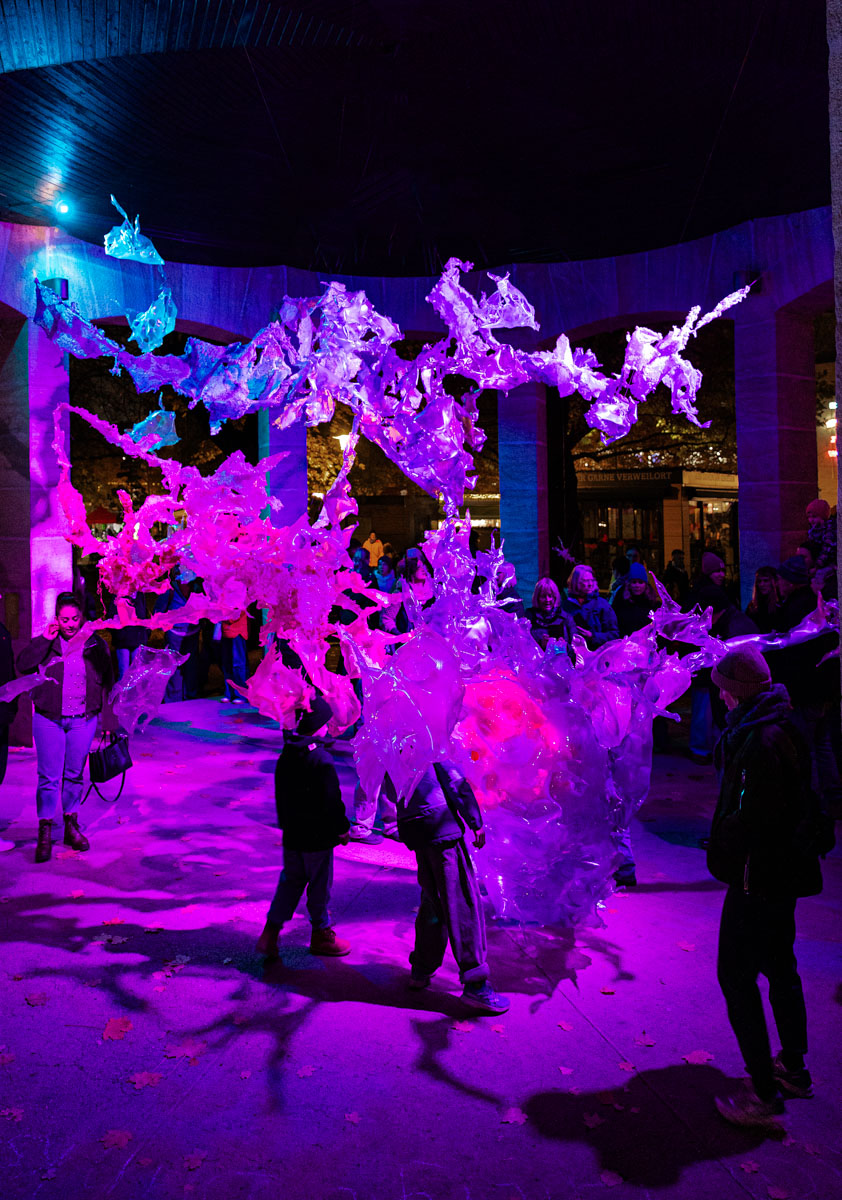
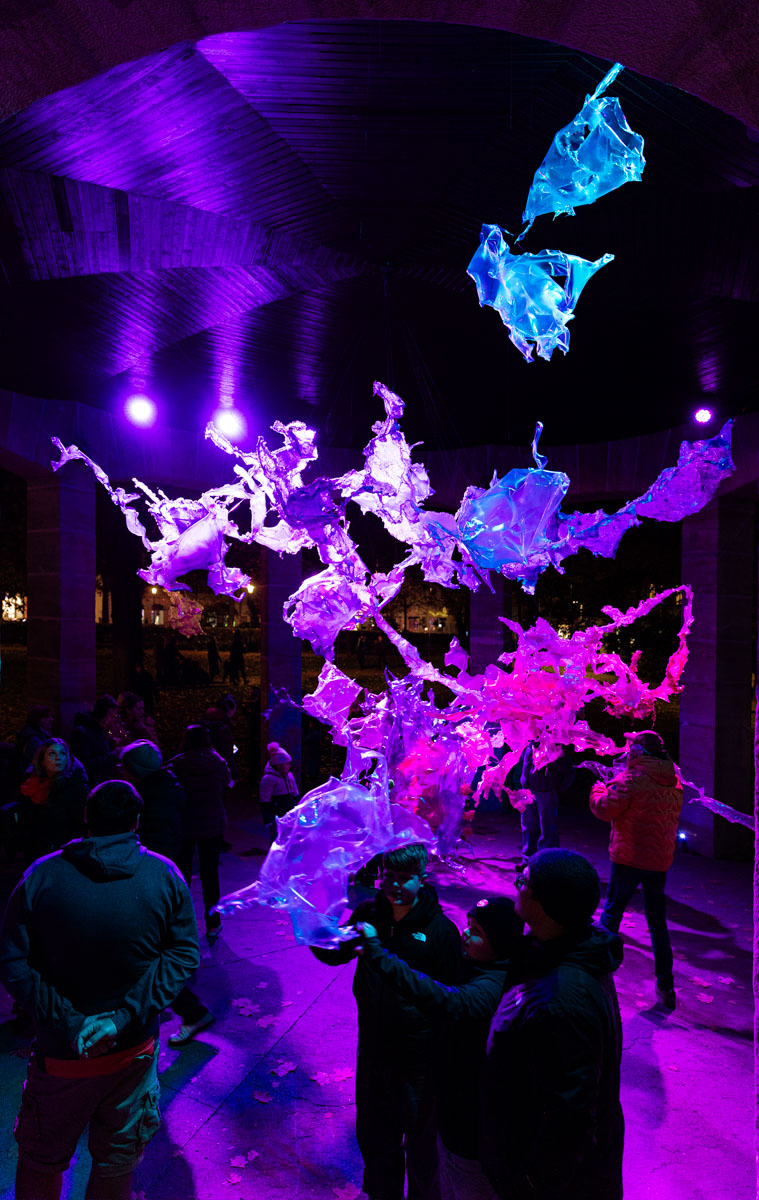
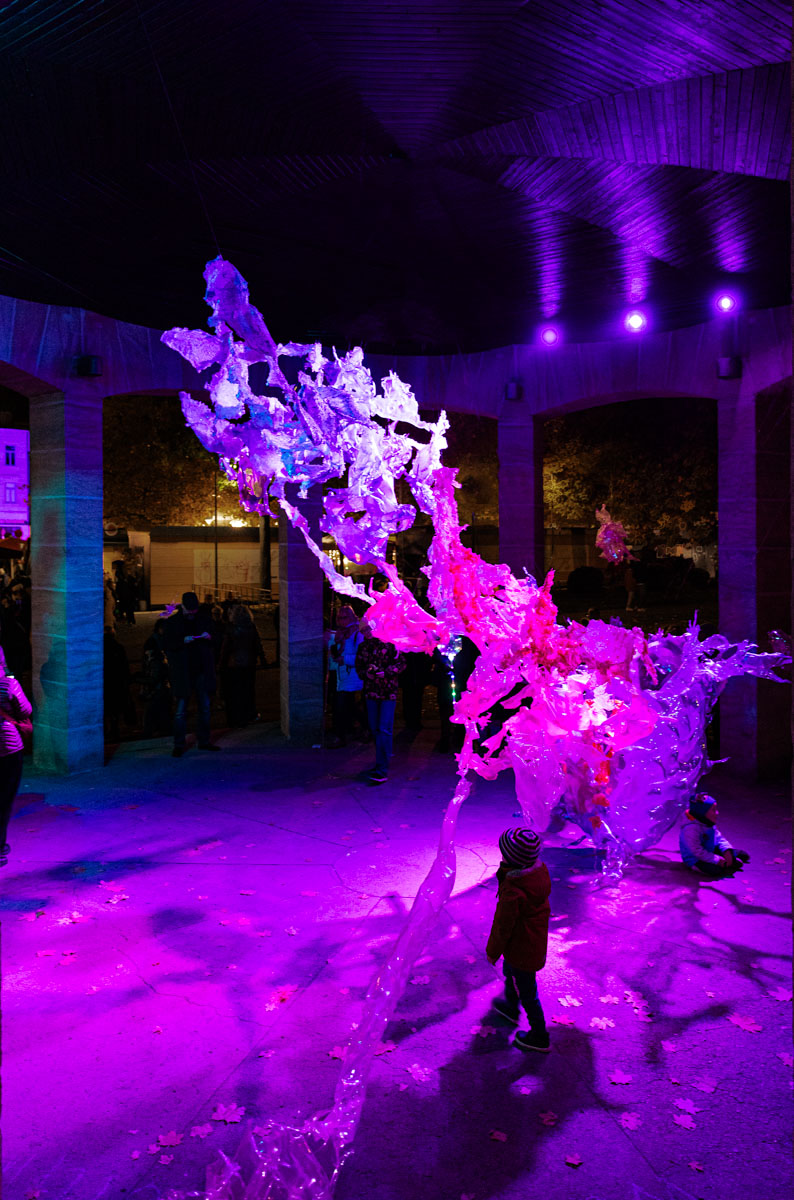
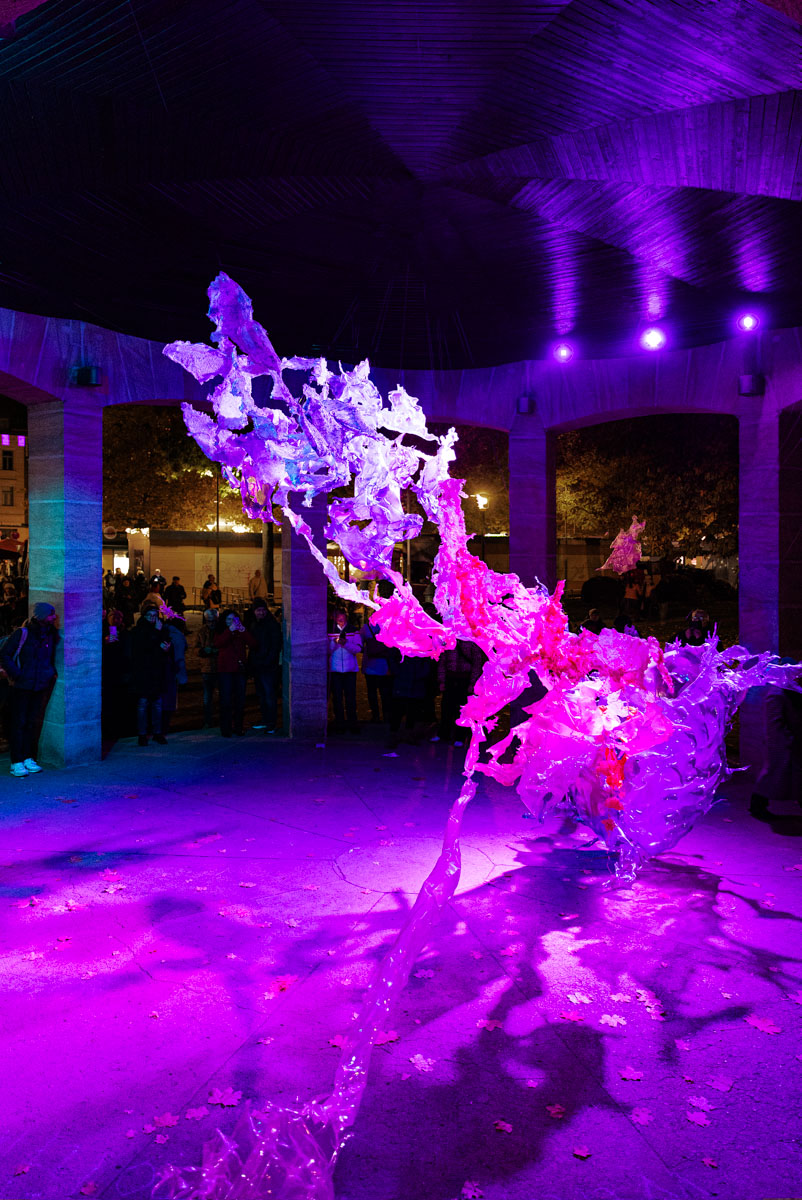
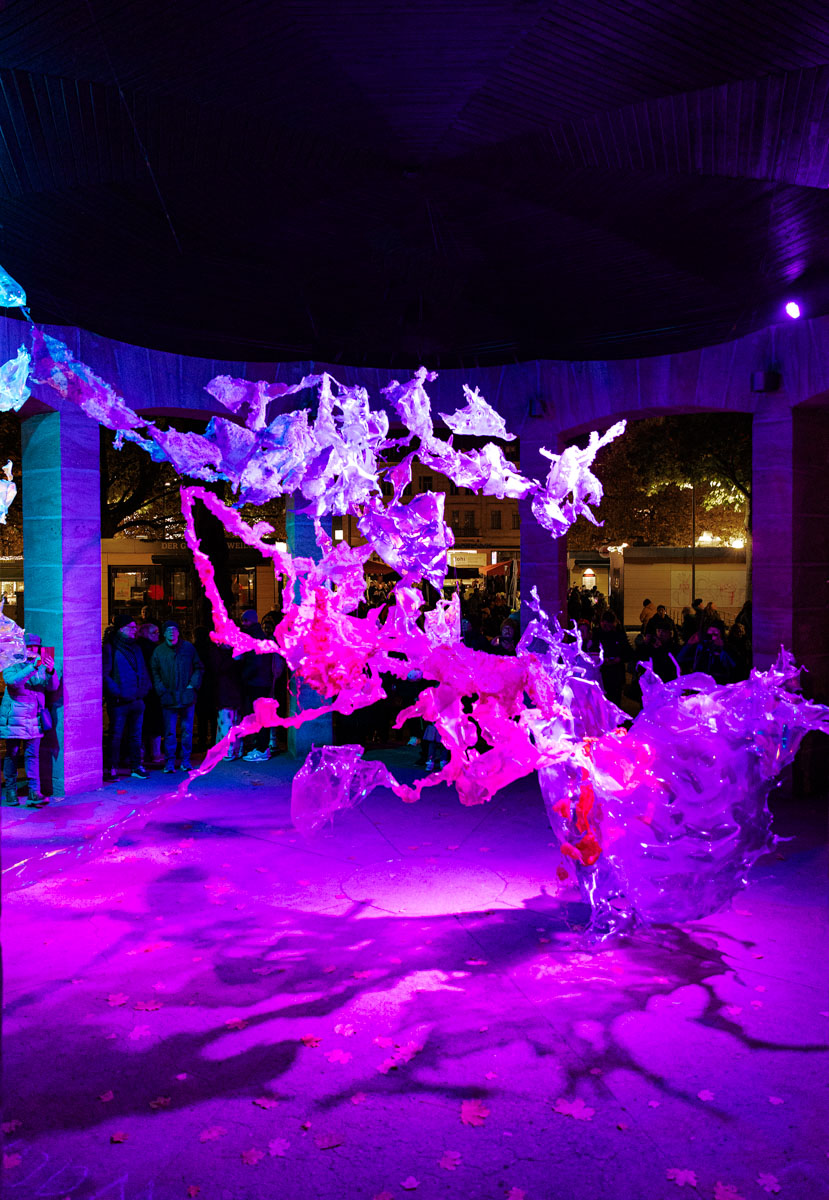
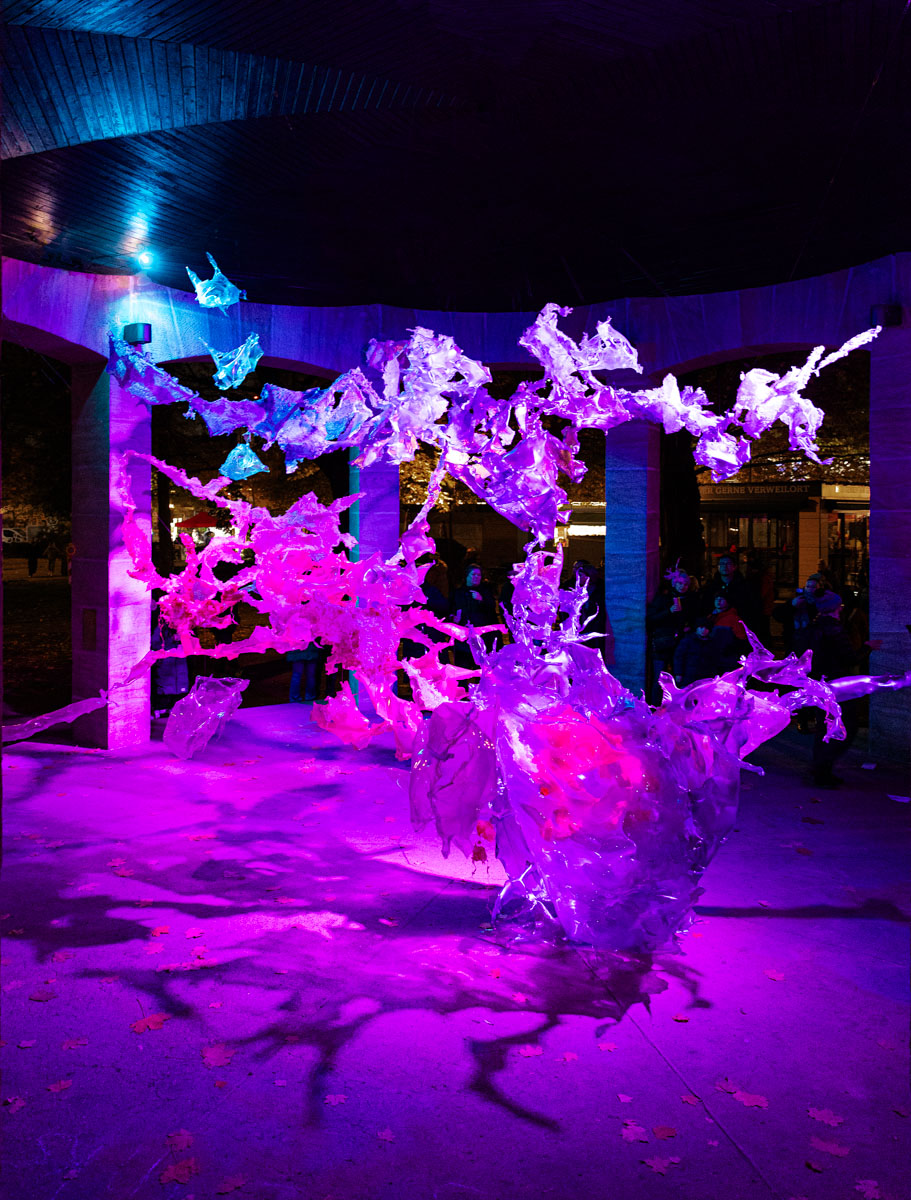
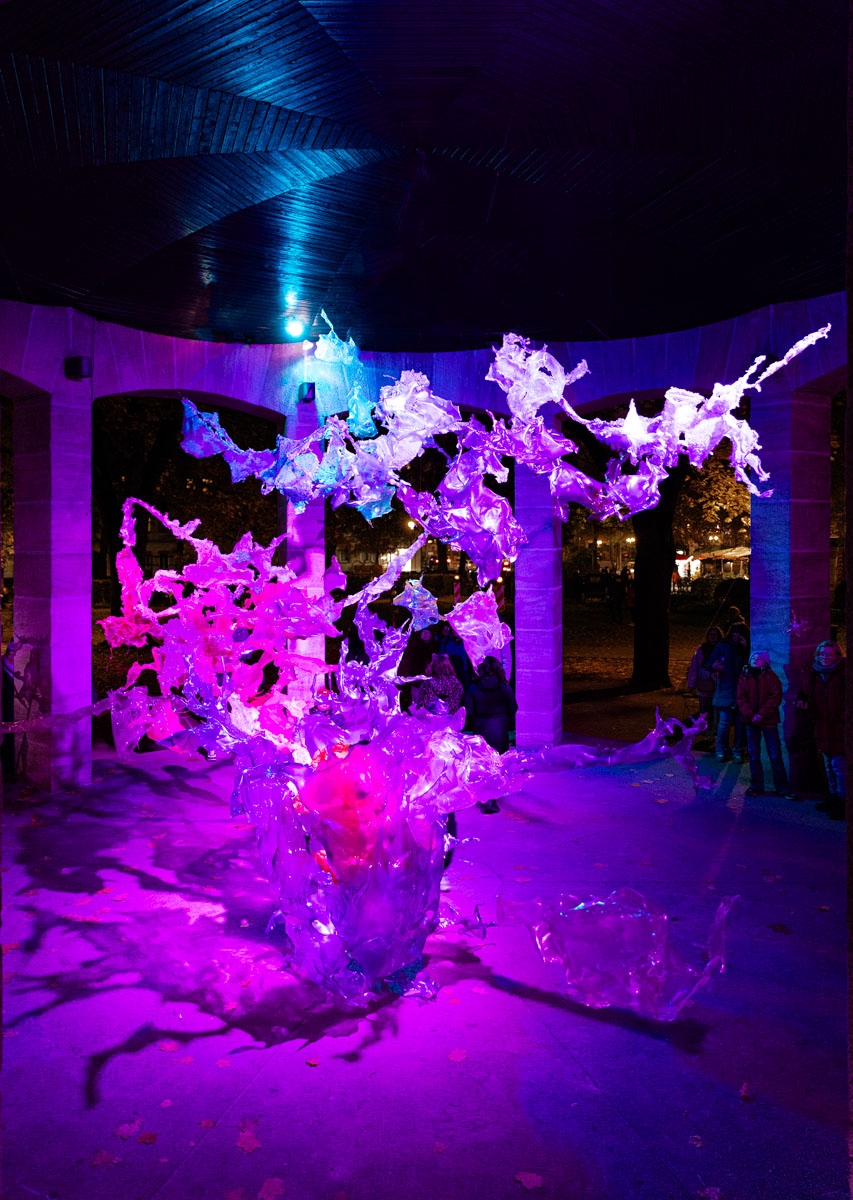
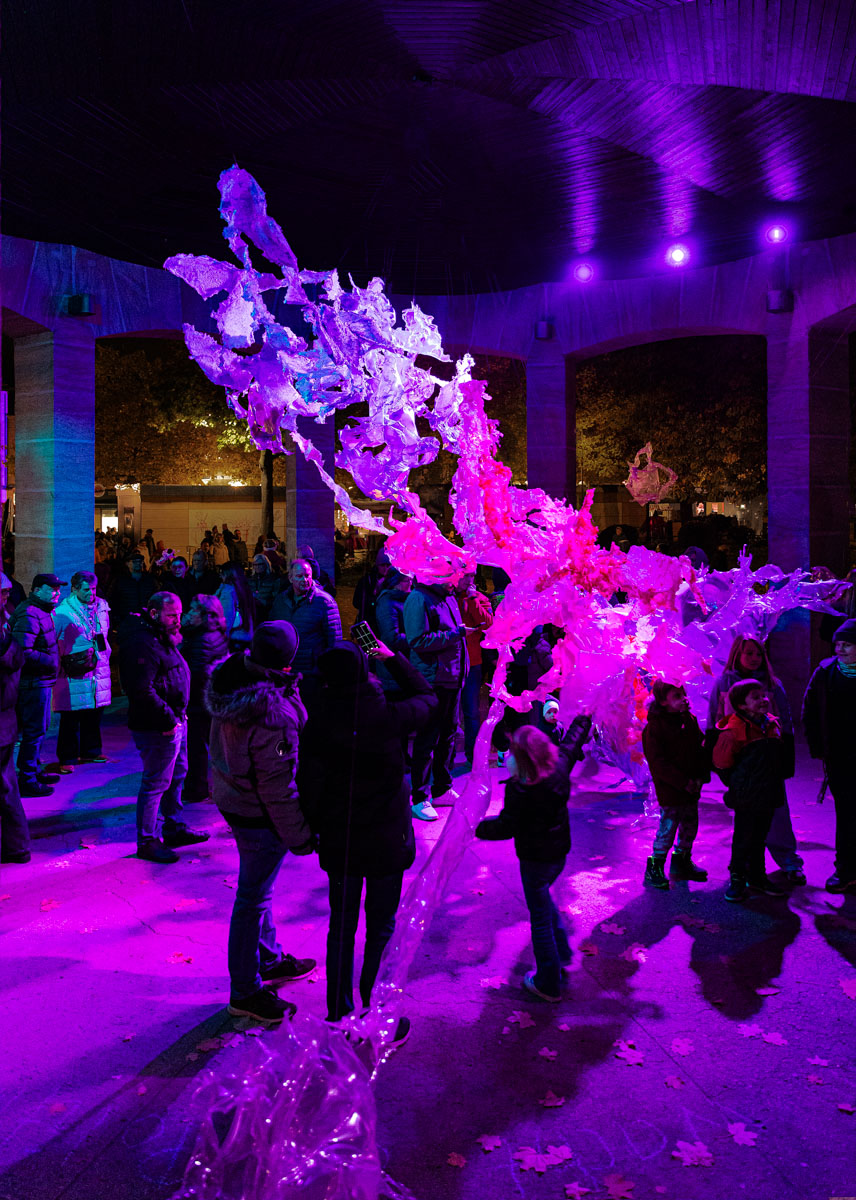
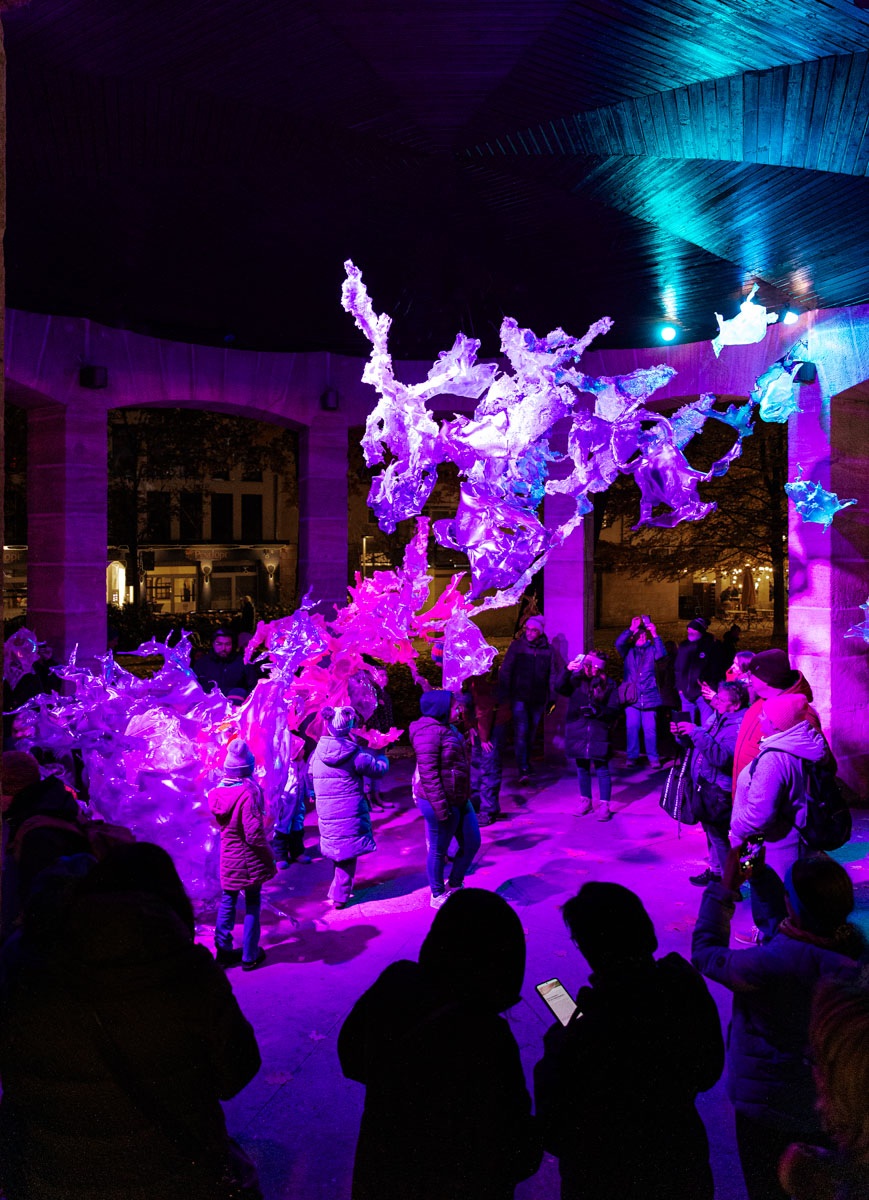
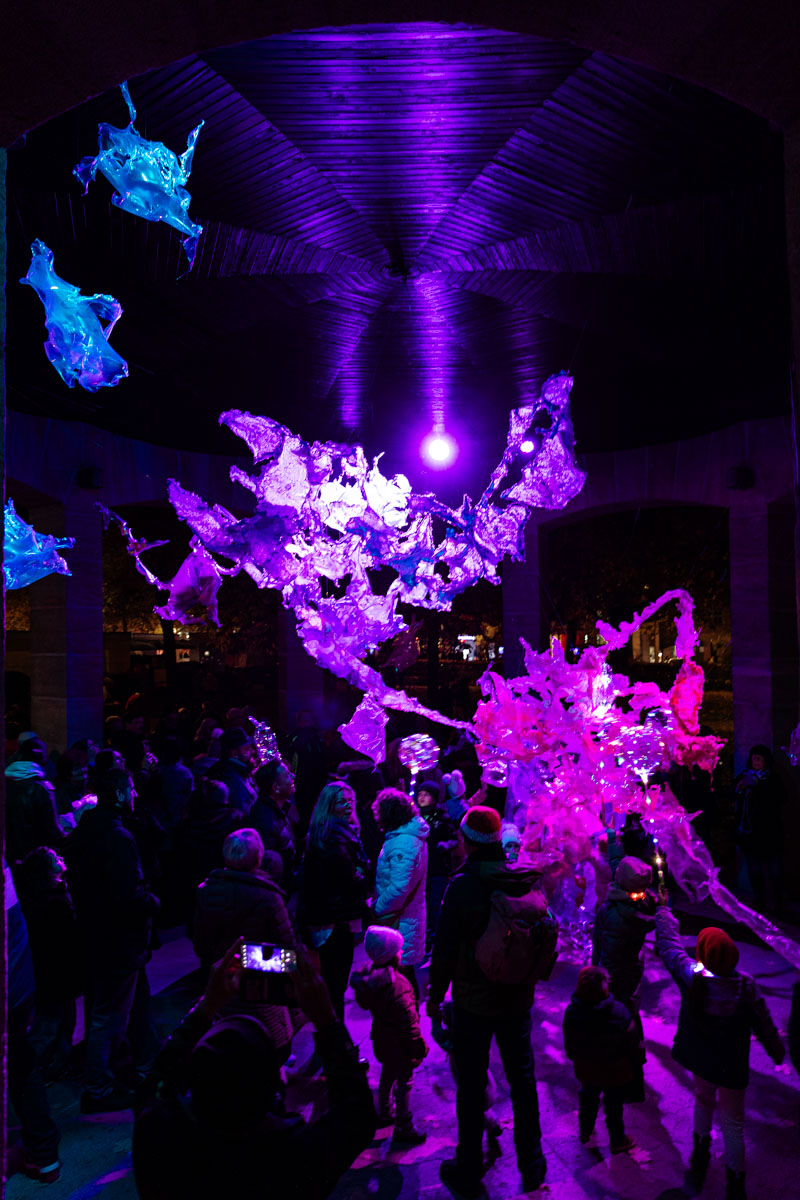
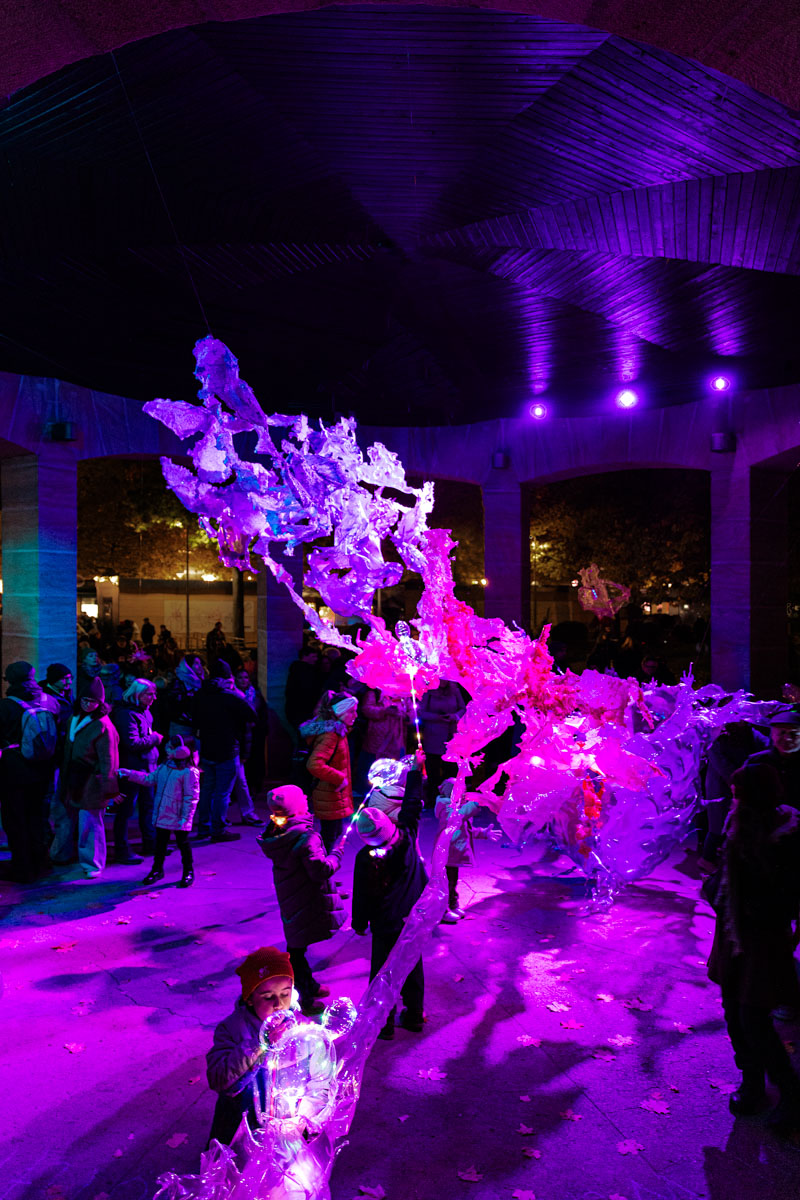
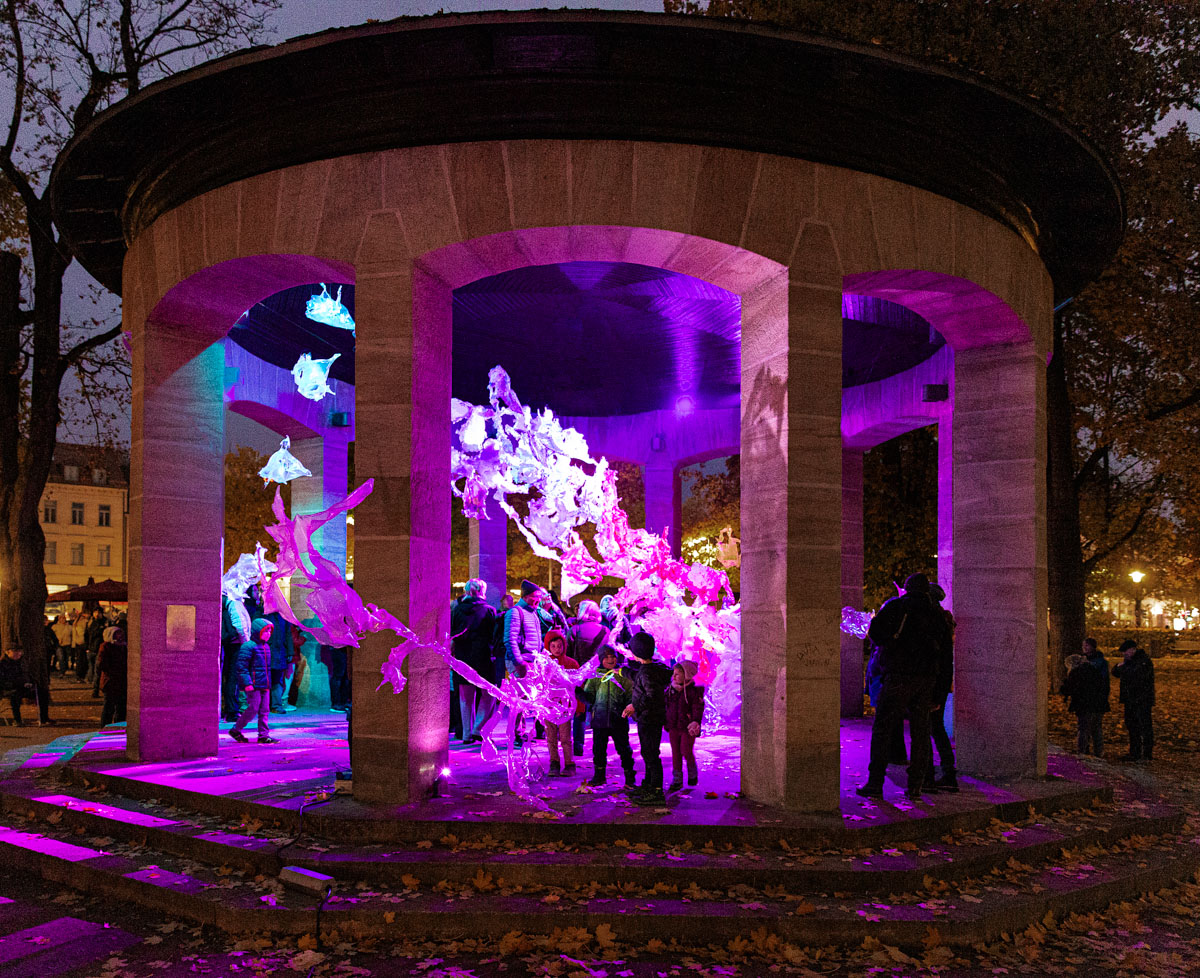
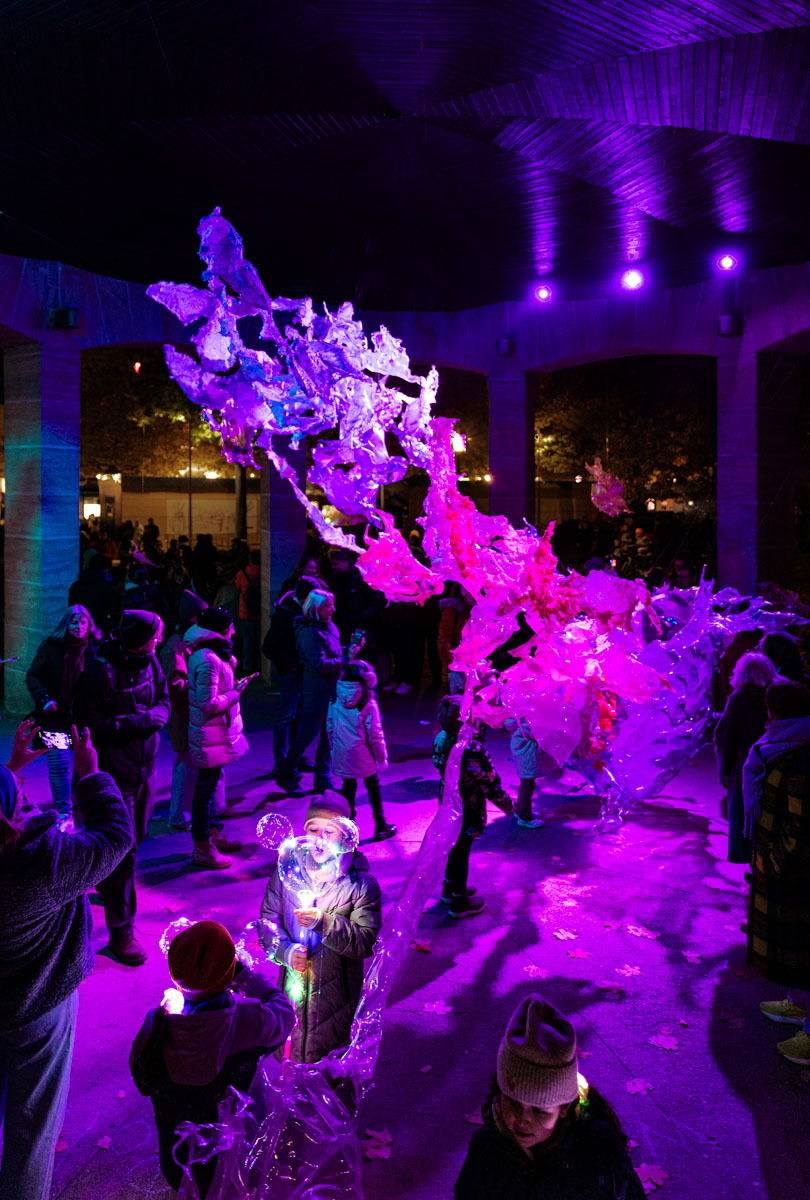
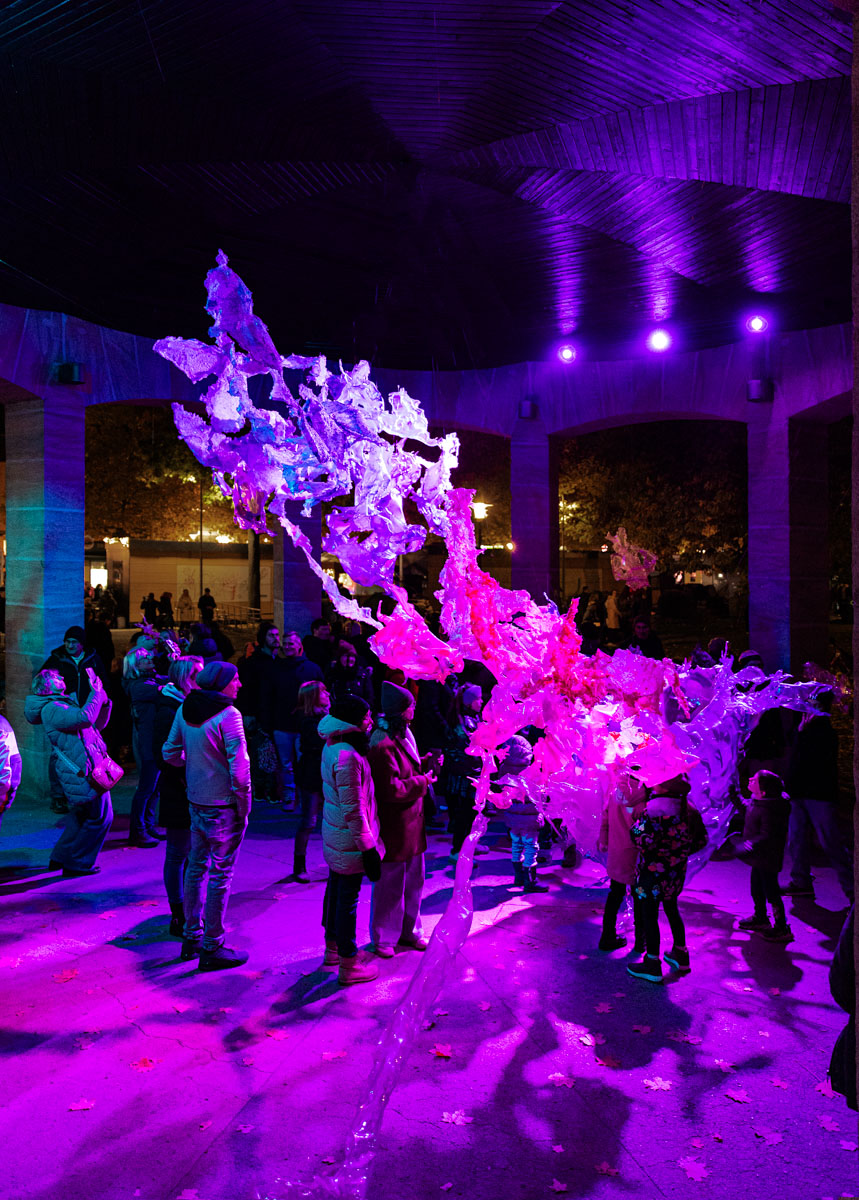
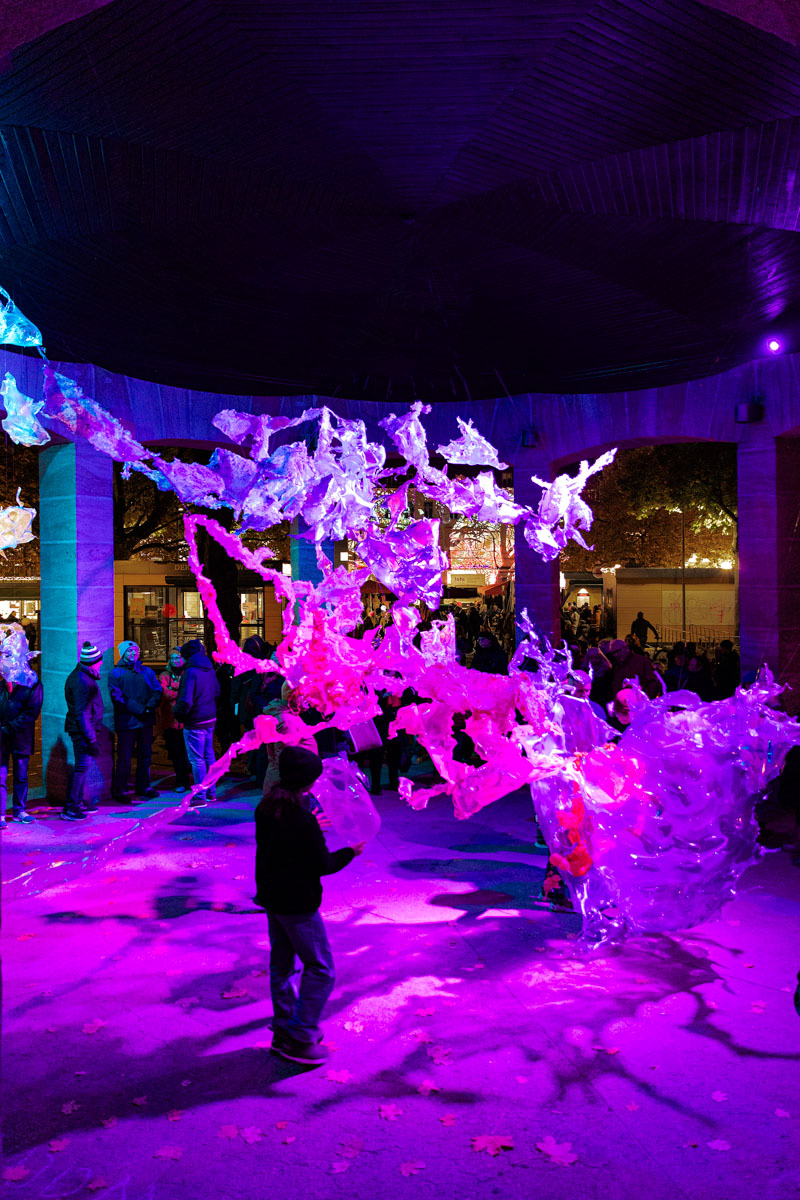
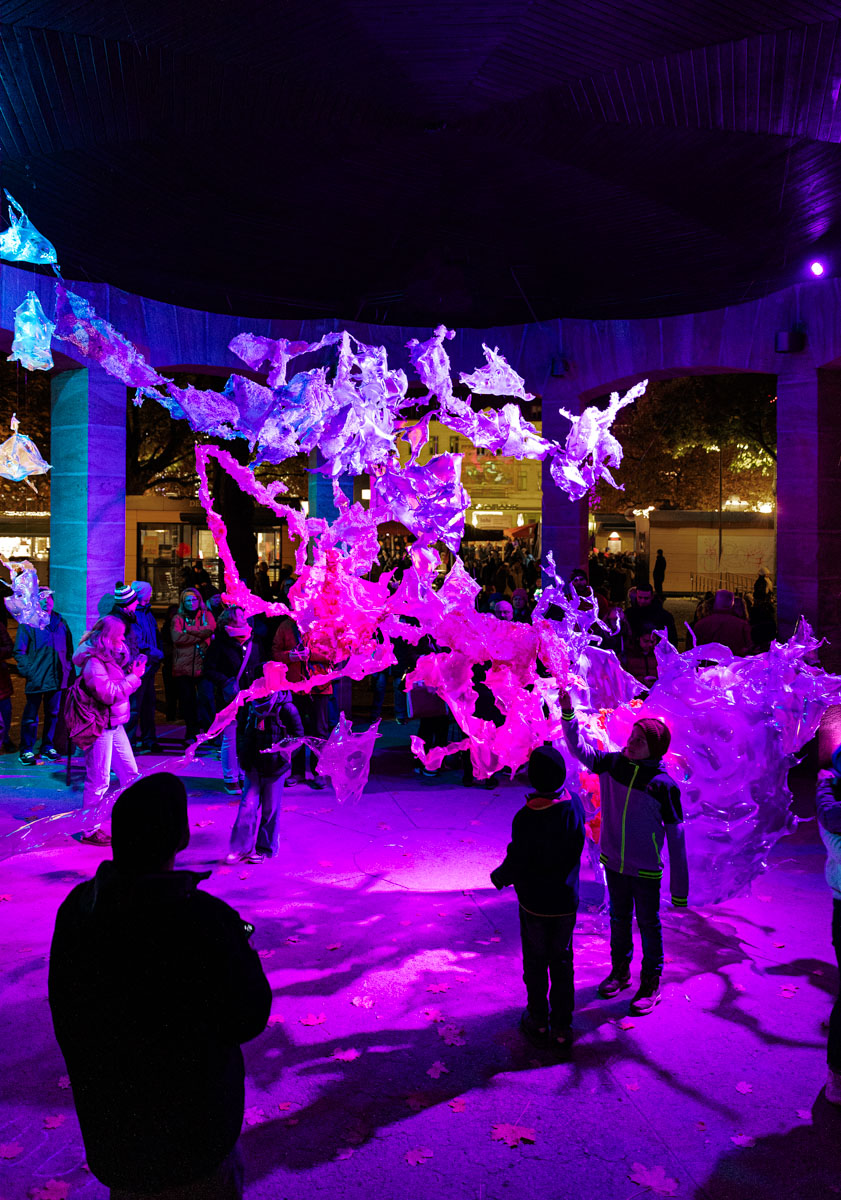
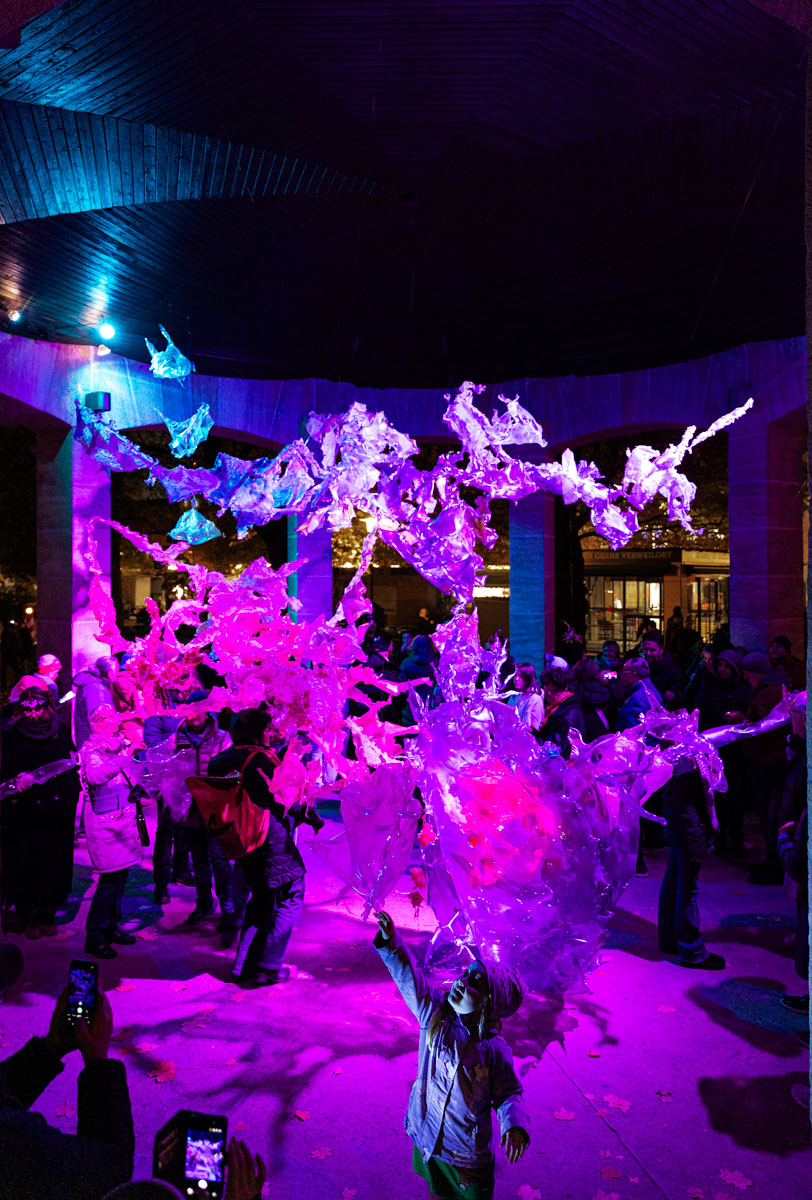
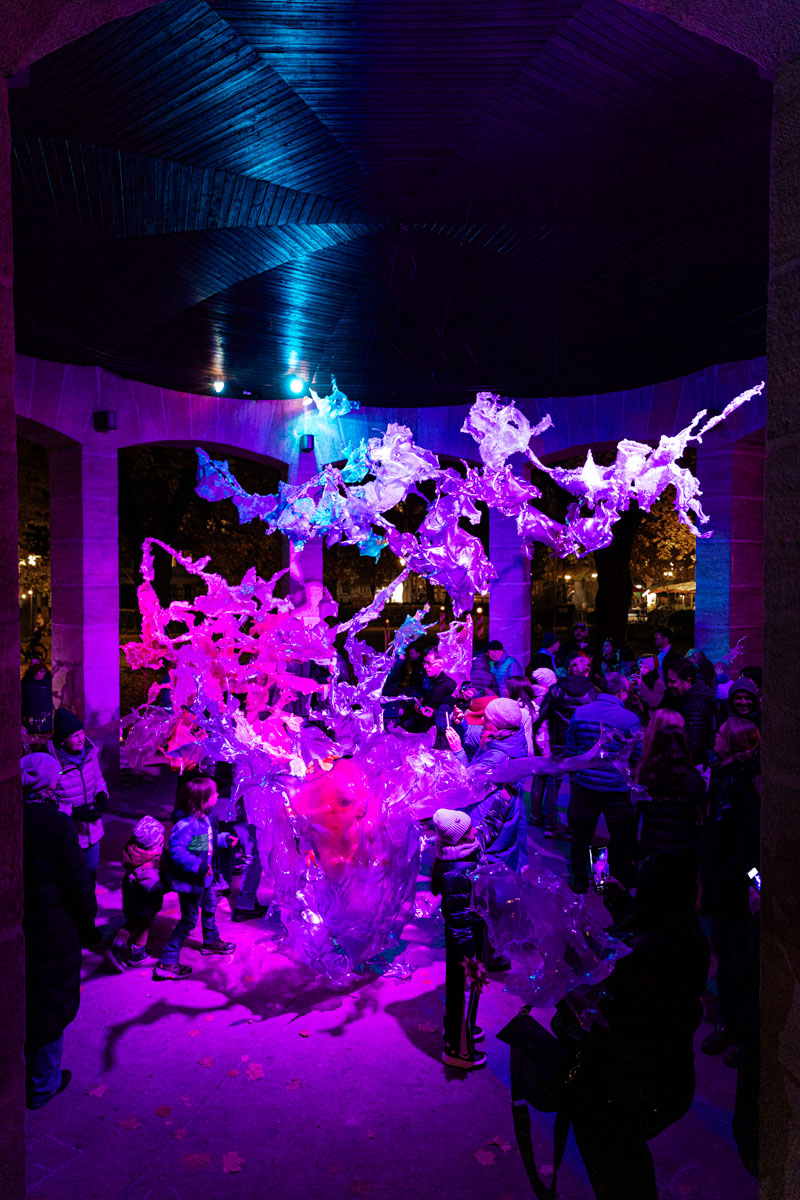
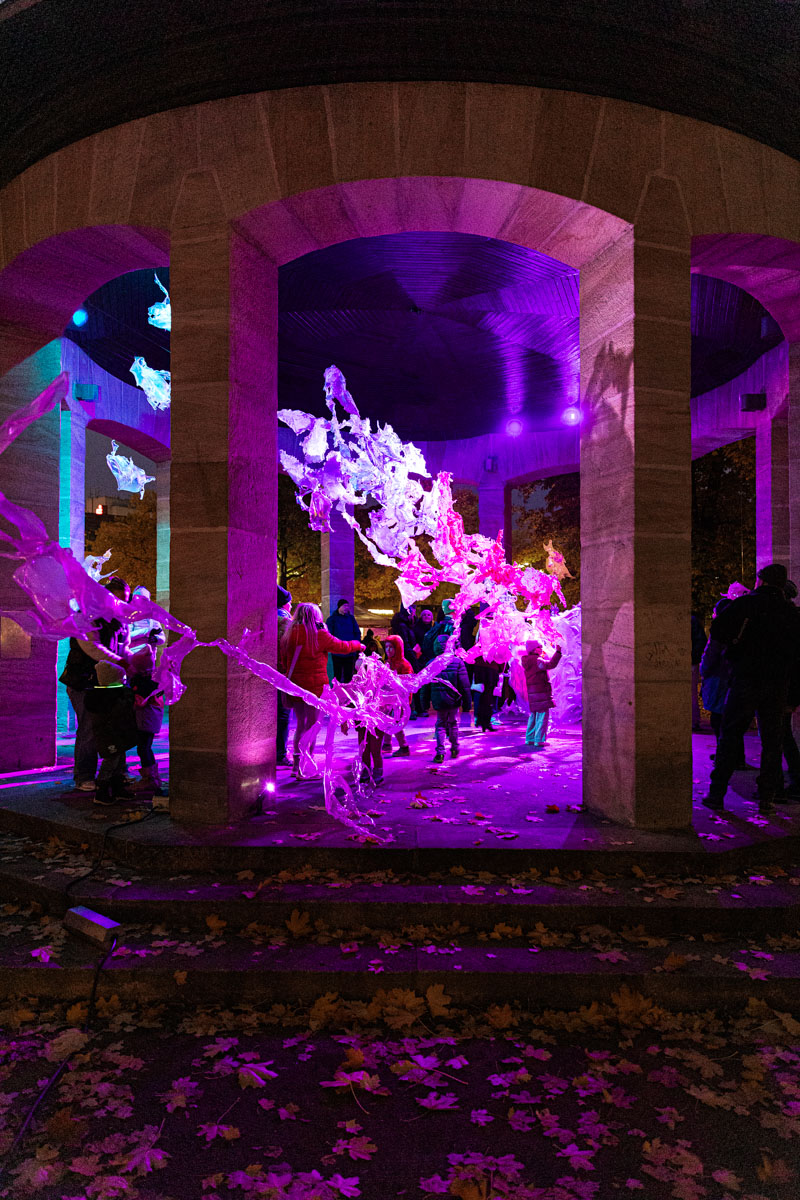
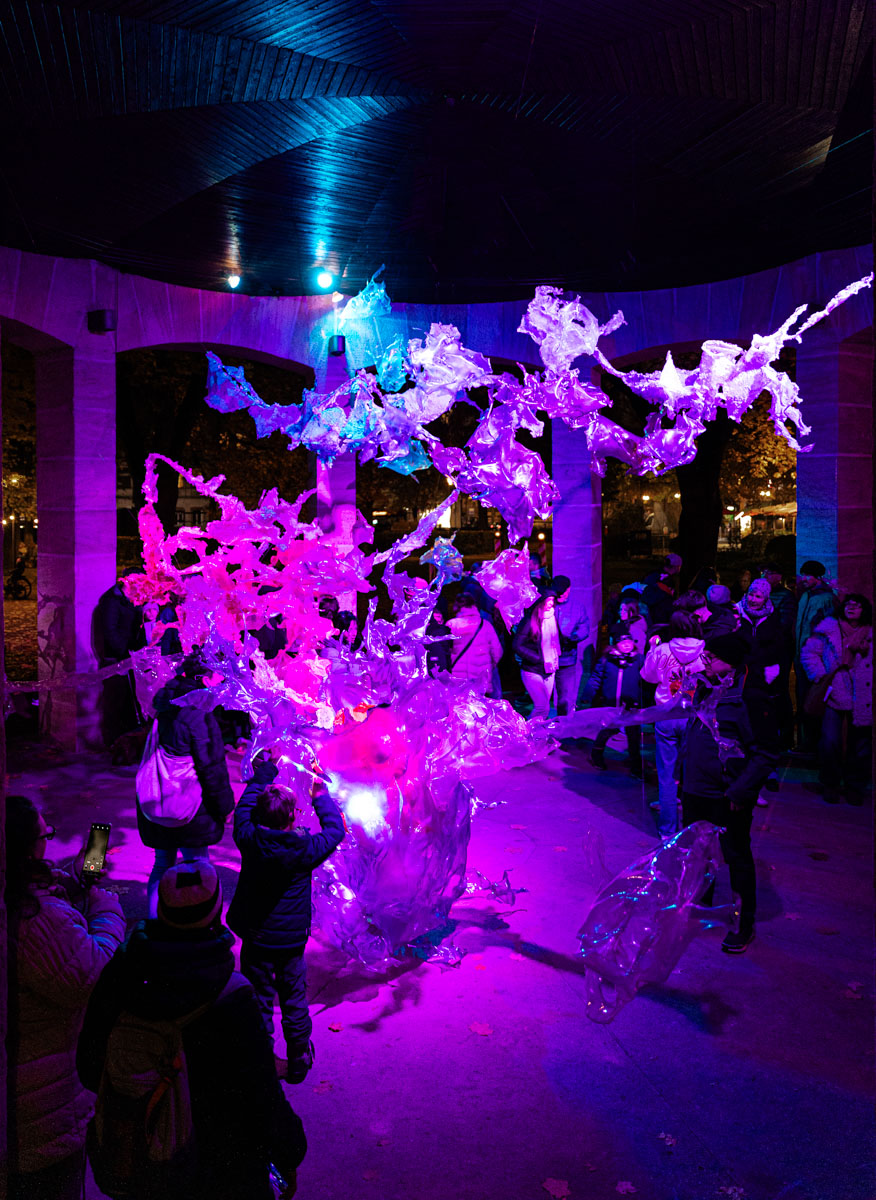
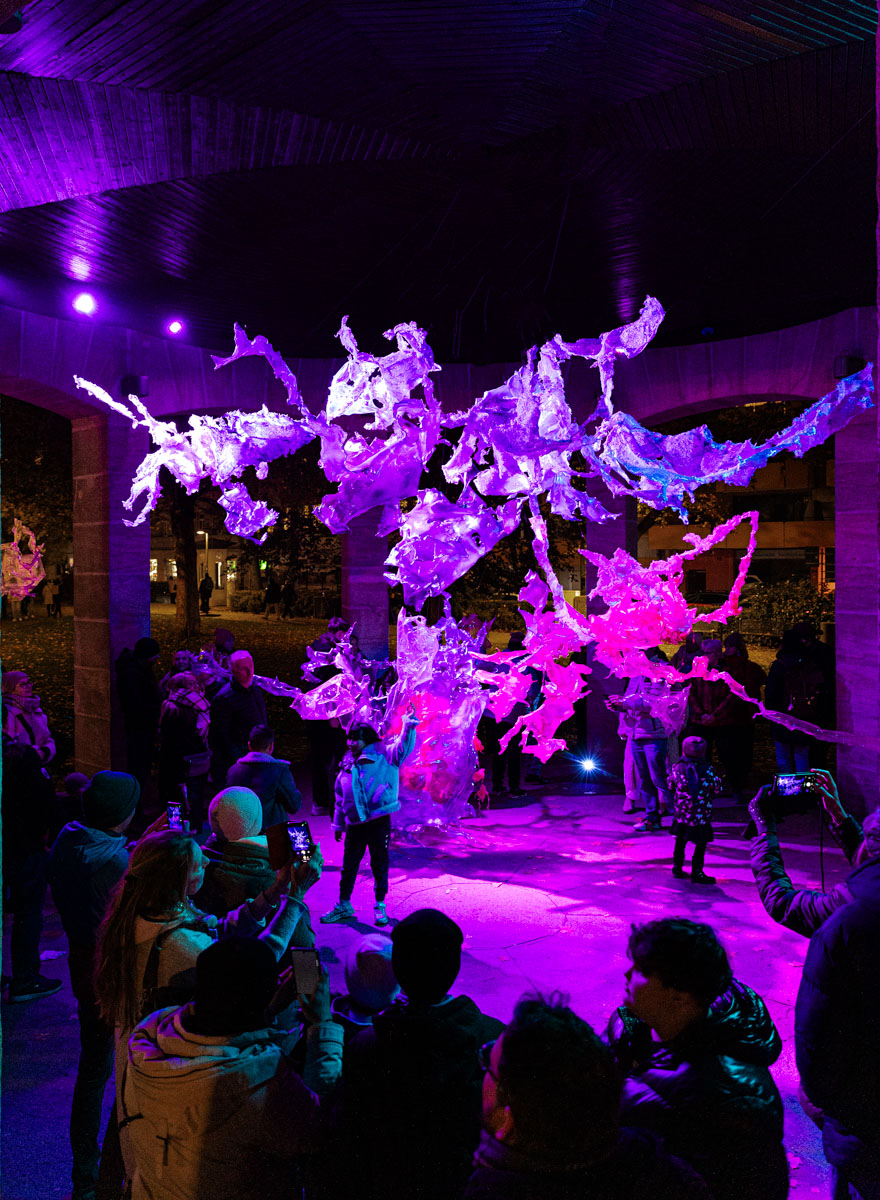
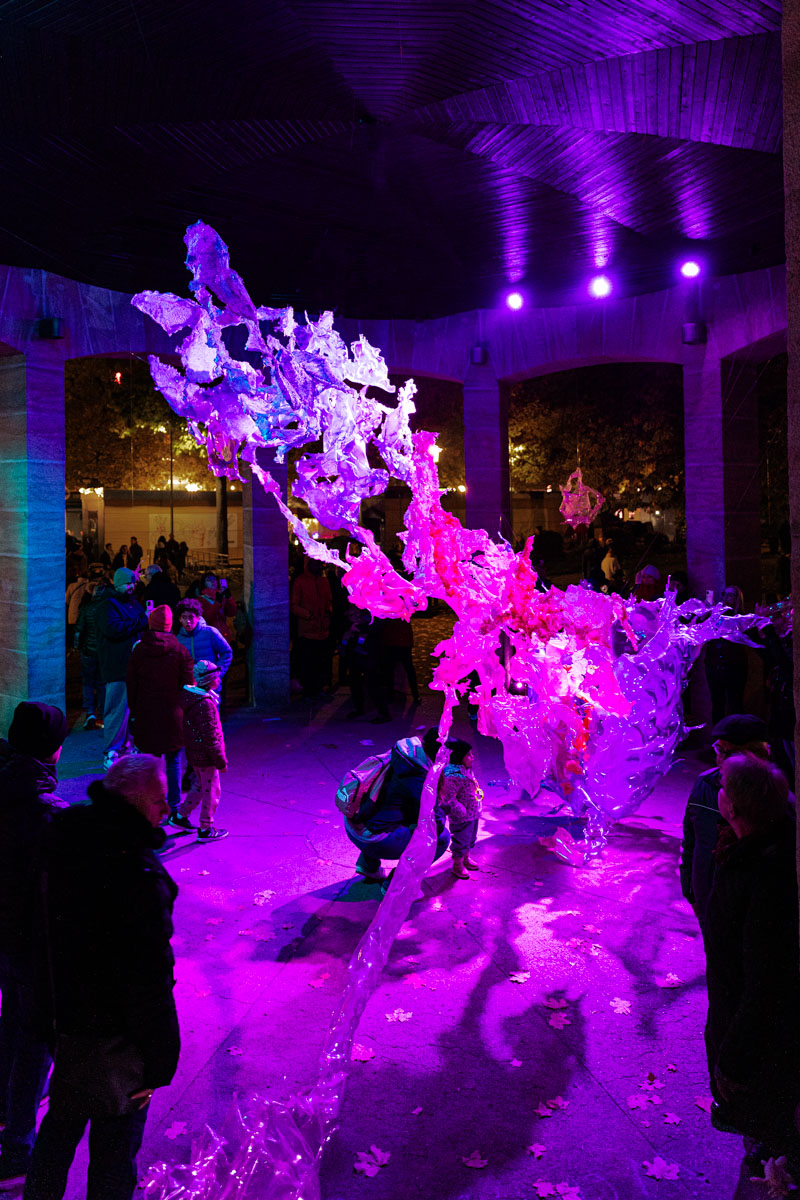
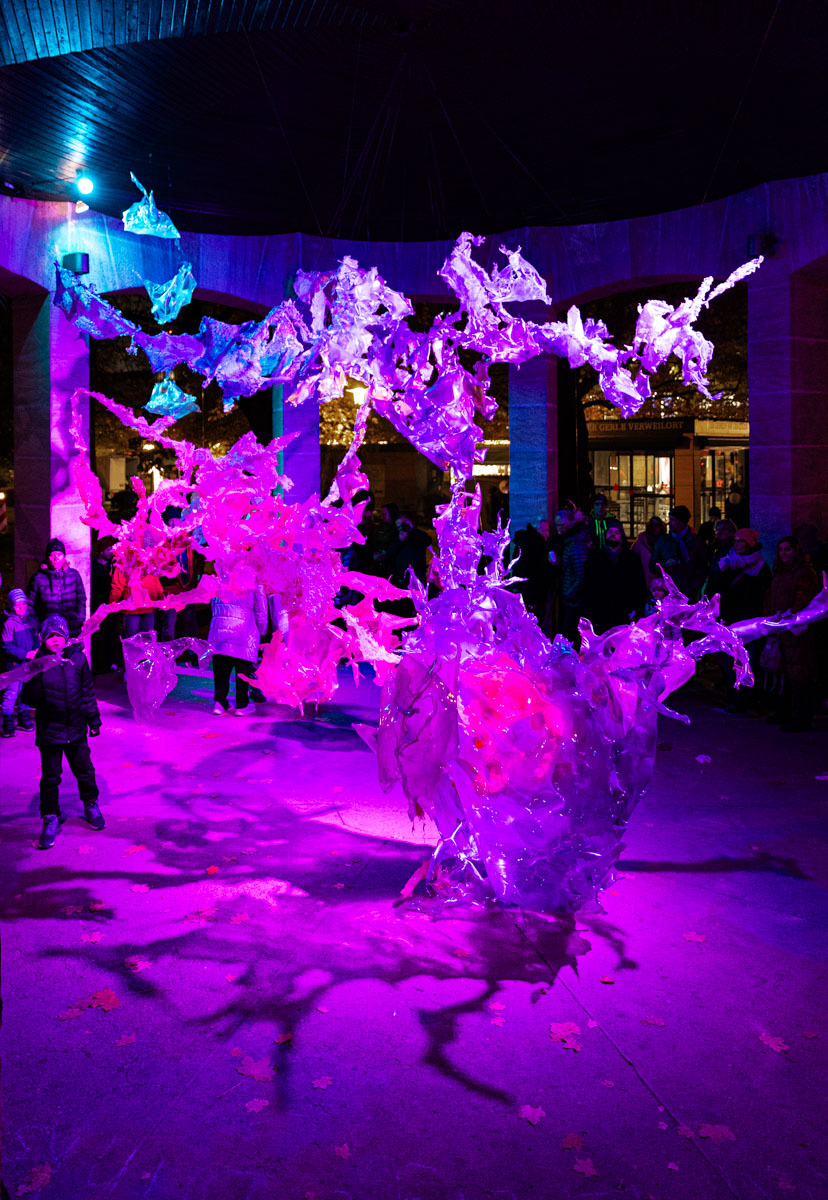
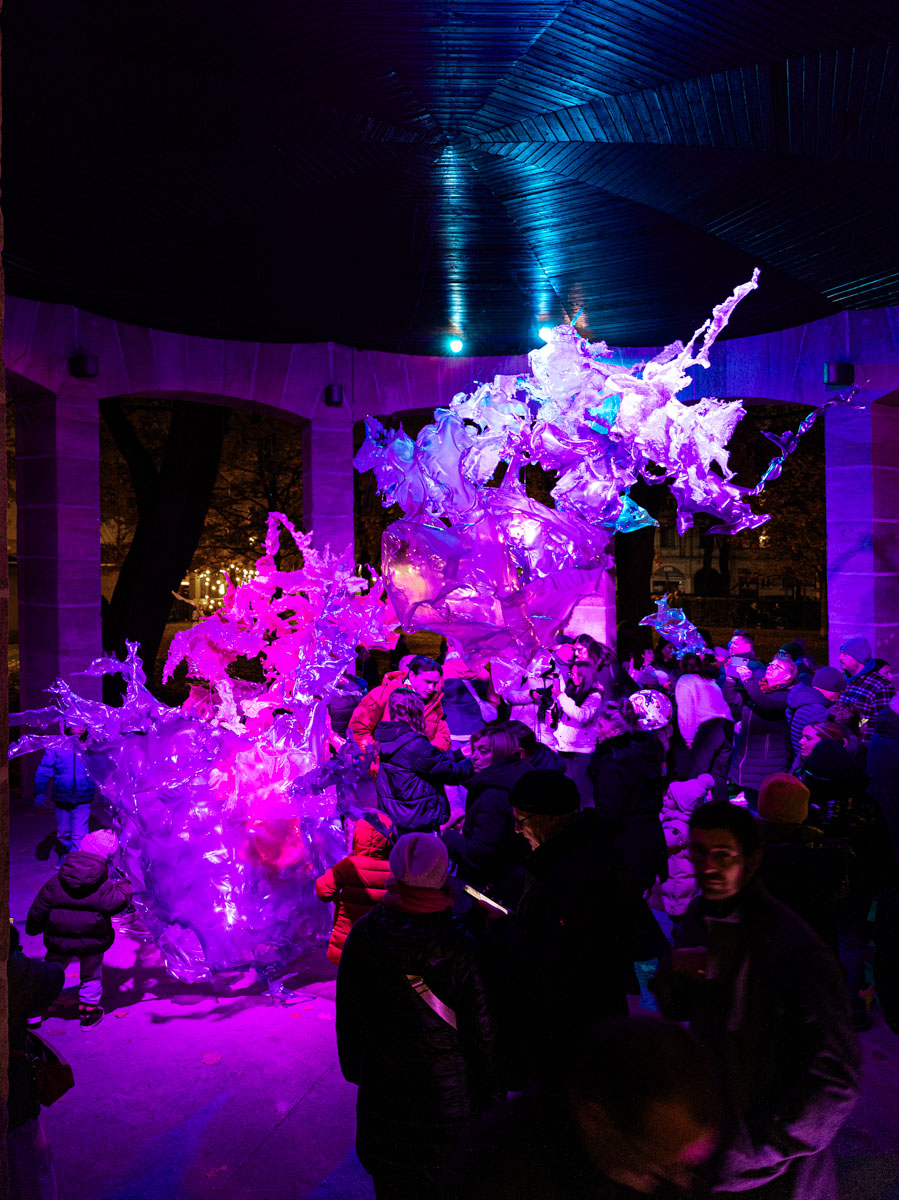
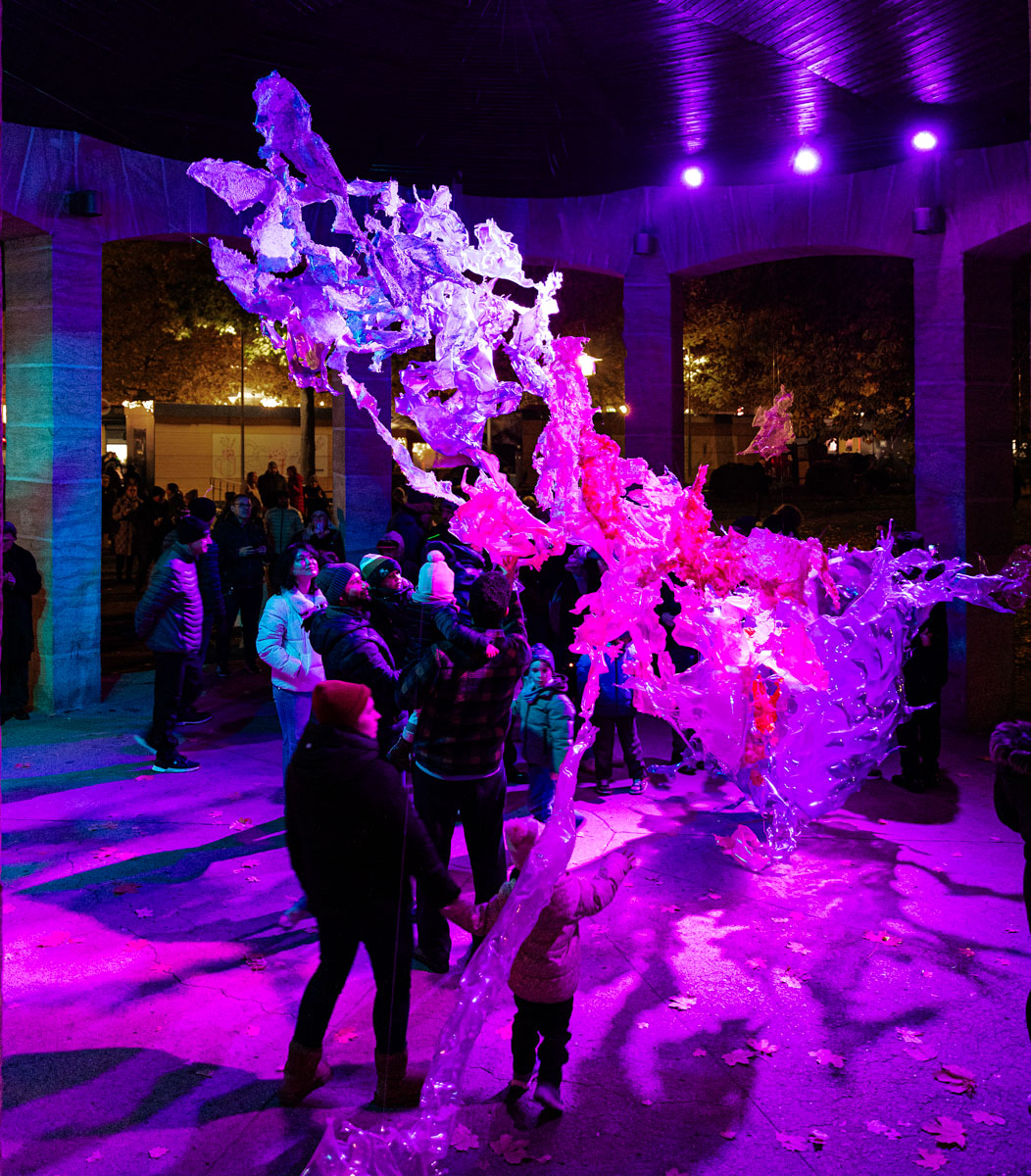
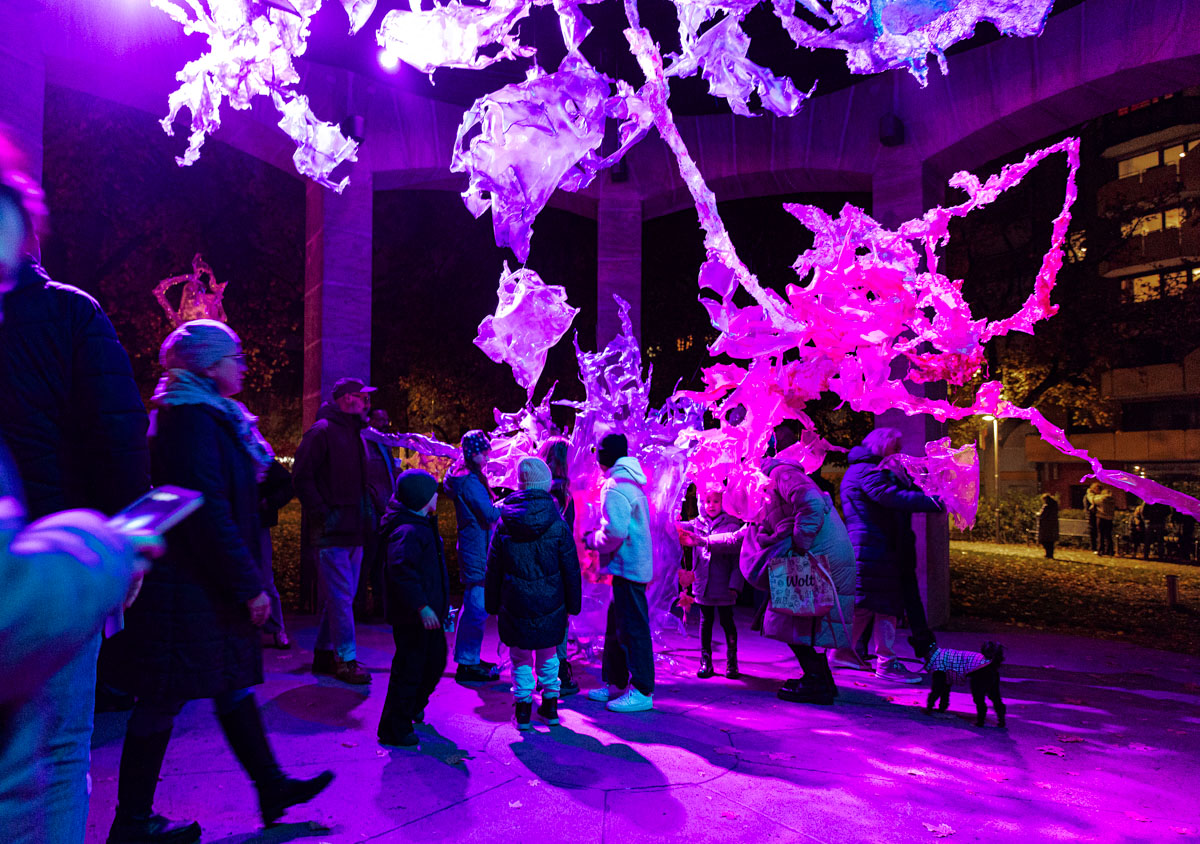
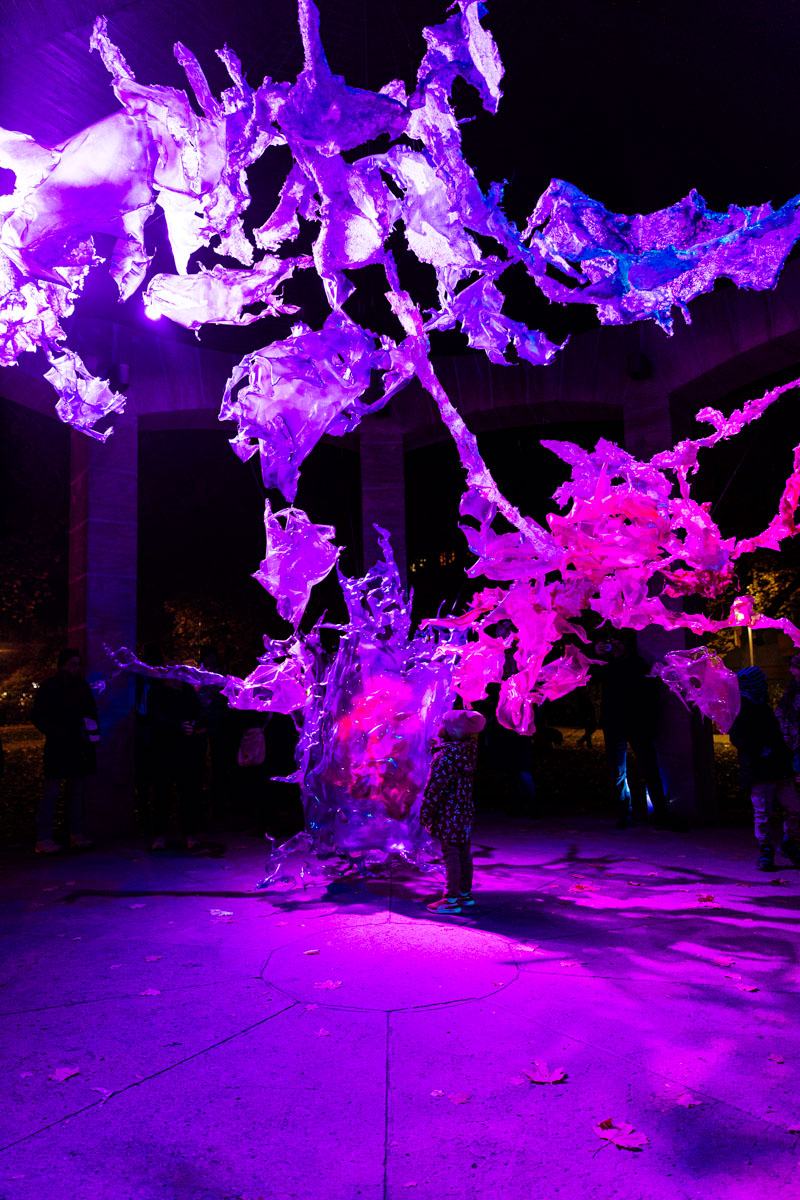
In the November darkness, translucent acrylic beings glowed violet, magenta and electric blue as thousands of hands, many belonging to children, explored their folds and membranes. The unfamiliar forms seemed luminous from within, though every photon came from elsewhere: an enlightening biological misunderstanding.
The installation, Monets Bioismus — 100 Jahre Metamorphose, took place a century after Claude Monet’s death. Claude made his garden at Giverny an experimental apparatus: he cultivated plants, engineered ponds and studied the changing behaviour of light on living surfaces and in paintings. For him, light was not merely an accessory to matter, but a restless phenomenon continually reinventing its appearance. Instead of representing organisms in light, why not imagine organisms for which light becomes anatomy? Not another lily; another lucid strangeness. The biology of light is already science fiction. Some deep-sea squid illuminate their undersides to disappear against the faint light above: camouflage by self-illumination, a magnificent evolutionary joke. Single-celled Euglena navigate towards light without image-forming eyes. Living cells emit ultraweak photons through oxidative chemistry. We are all extremely unsuccessful lanterns. Children wanted to understand why the bioisms glowed. They shook the installation, squeezed its softer parts, pulled at its extensions and tried to tear open larger bodies to discover what might be hidden inside: a wonderfully impolite investigation into hypothetical photobiology. Thousands of touches left lucidprints: an unintended biochemical annotation of an imaginary superbeing. A single photon can initiate an electrical response in a retinal cell; absorbed by chlorophyll, light can drive chemical work. November darkness itself is a biological parameter, regulating circadian rhythms and seasonal behaviour. Light becomes information, energy, orientation, biological time and occasionally a very sophisticated deception.
Could synthetic evolution invent lucidomorphs whose transparency becomes an active biological faculty, whose anatomy consists of changing optical relationships, whose metabolism transforms light into unfamiliar forms of sensation, communication and existence, and whose luminous bodies might one day make our present biology appear rather unnecessarily opaque?
Fürther Glanzlichter — Stadt Fürth